
red disk: revealing patterns
Inside the Pierce Arrow Building in Buffalo, New York, an artist-powered, micro-manufacturing facility doubles as a forensic design lab. The subjects at hand are wallpaper patterns created by American master Charles E. Burchfield a century ago during his time as a designer for Buffalo’s own M. H. Birge & Sons Company.
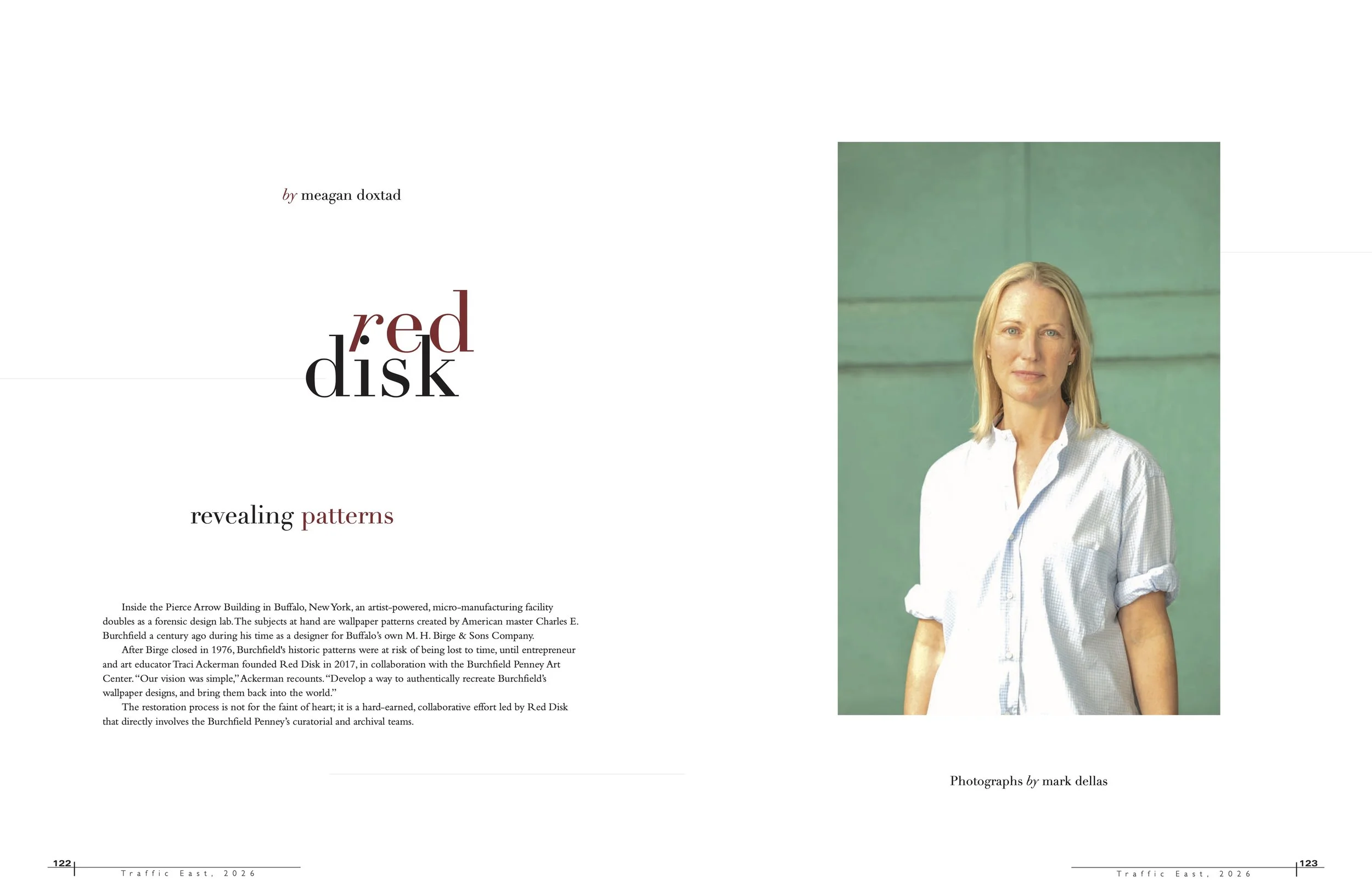
After Birge closed in 1976, Burchfield's historic patterns were at risk of being lost to time, until entrepreneur and art educator Traci Ackerman founded Red Disk in 2017, in collaboration with the Burchfield Penney Art Center. “Our vision was simple,” Ackerman recounts. “Develop a way to authentically recreate Burchfield’s wallpaper designs, and bring them back into the world.”
The restoration process is not for the faint of heart; it is a hard-earned, collaborative effort led by Red Disk that directly involves the Burchfield Penney’s curatorial and archival teams.

Original wallpaper specimens are pulled and examined. Reference scans are made. From there, the forensic design work begins with an analysis of each layer, determining which details should be sampled from the historic print and which should be recomposed, and assessing how much of the distressed character of the original surface printing methods–“chatter” as Red Disk’s lead printer Madeline Bartley calls it–will be included in the silk-screened reproductions.
“There’s an art to bringing these wallpaper patterns back,” says Kyle Morrissey, partner at Red Disk. “You need to understand how it was made originally to make it again.” Morrissey is also a partner at White Bicycle, a nationally recognized Buffalo-based design studio that has collaborated closely with the Burchfield Penney for nearly twenty years.
Through the strategic, three-way alliance between Red Disk, White Bicycle, and the Burchfield Penney, the multi-faceted team of artists, designers, and curators is bringing academic understanding, unique experience, and fresh perspective to this less-explored chapter of Burchfield’s work.
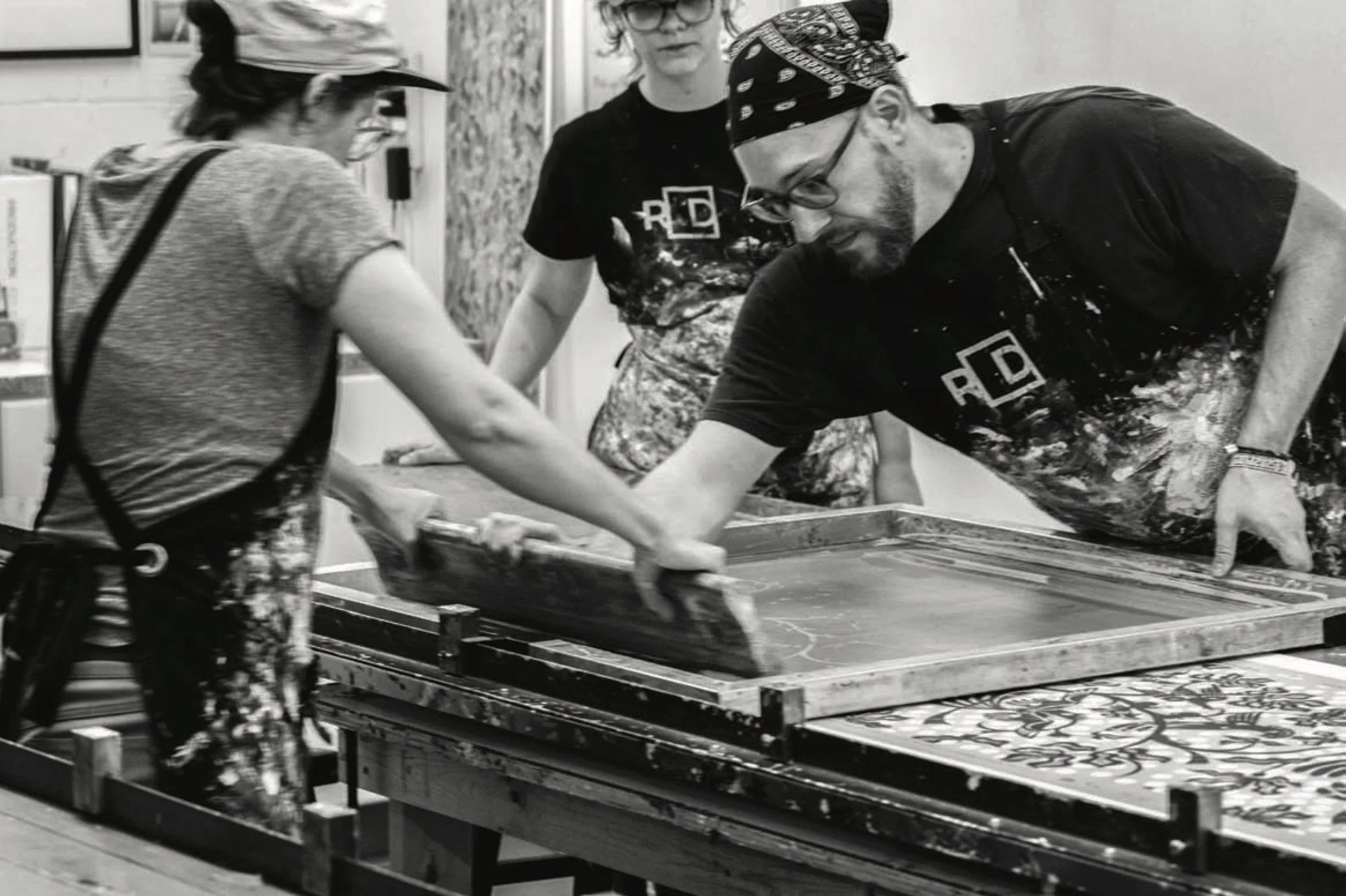
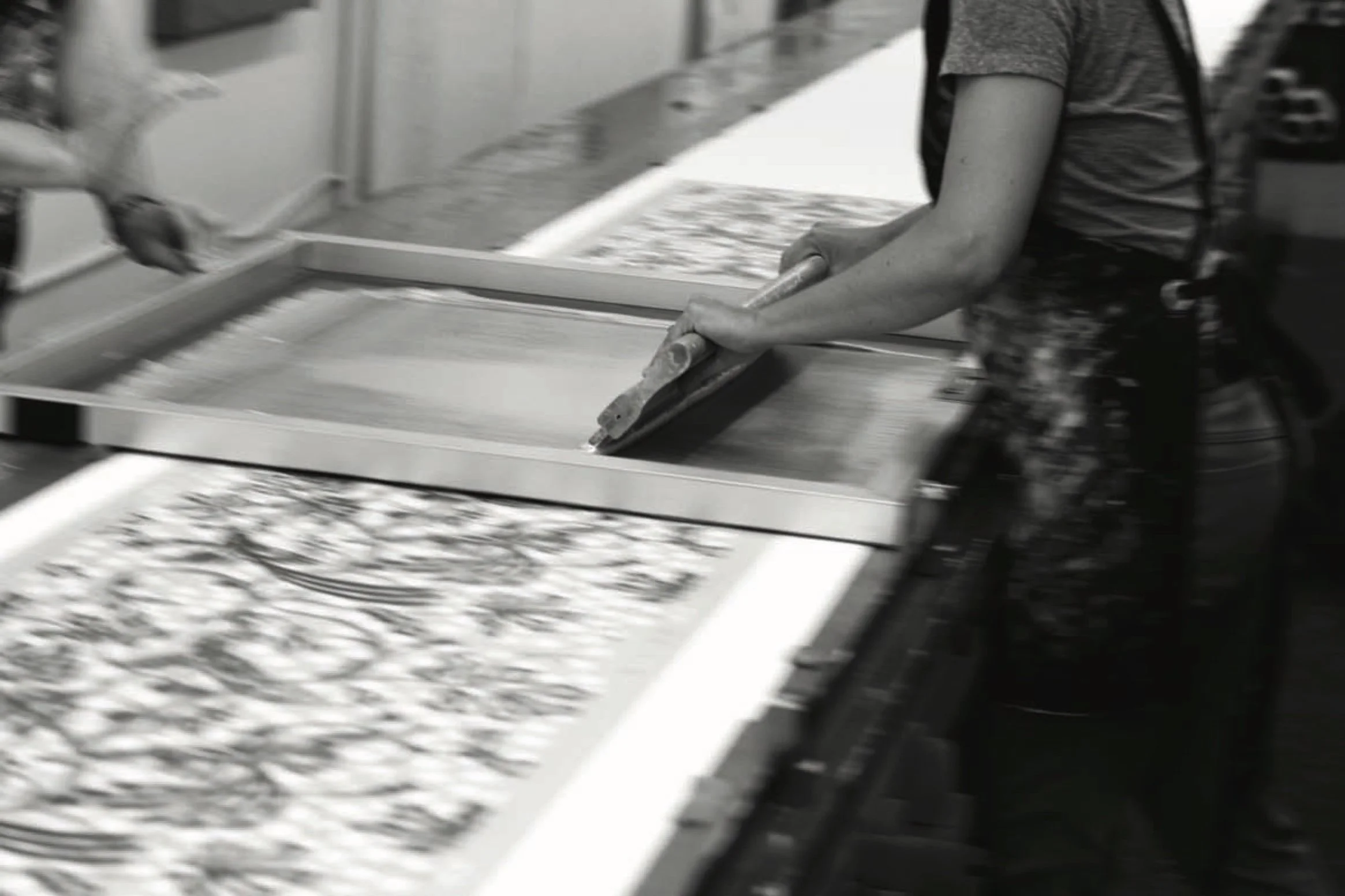
“Unless you were a printer at Birge, you wouldn't recognize what our team’s had the opportunity to discover,” says Brian Grunert, partner at Red Disk and White Bicycle. “Look at the first few layers of The Birches. It’s a camo abstraction–no doubt an echo of the camouflage designs Burchfield made in the Army during World War I–newly brought to life in a nature motif.”
“We are the sum of the influences we experience,” Grunert continues. “While that idea on its own isn’t revelatory, what we’ve found is that Burchfield’s transcendental landscapes–his later masterworks–are meaningfully connected to the experience he gathered at Birge. Wallpaper was influential in sparking those creations.”
Burchfield's designs are painterly yet intentional, and in sum immersive; each layer adds a new depth to navigate, for the Red Disk team as well. But they strive to understand the story behind each paper. “We're not only making beautiful things,” Morrissey says. “We're making meaningful things.”
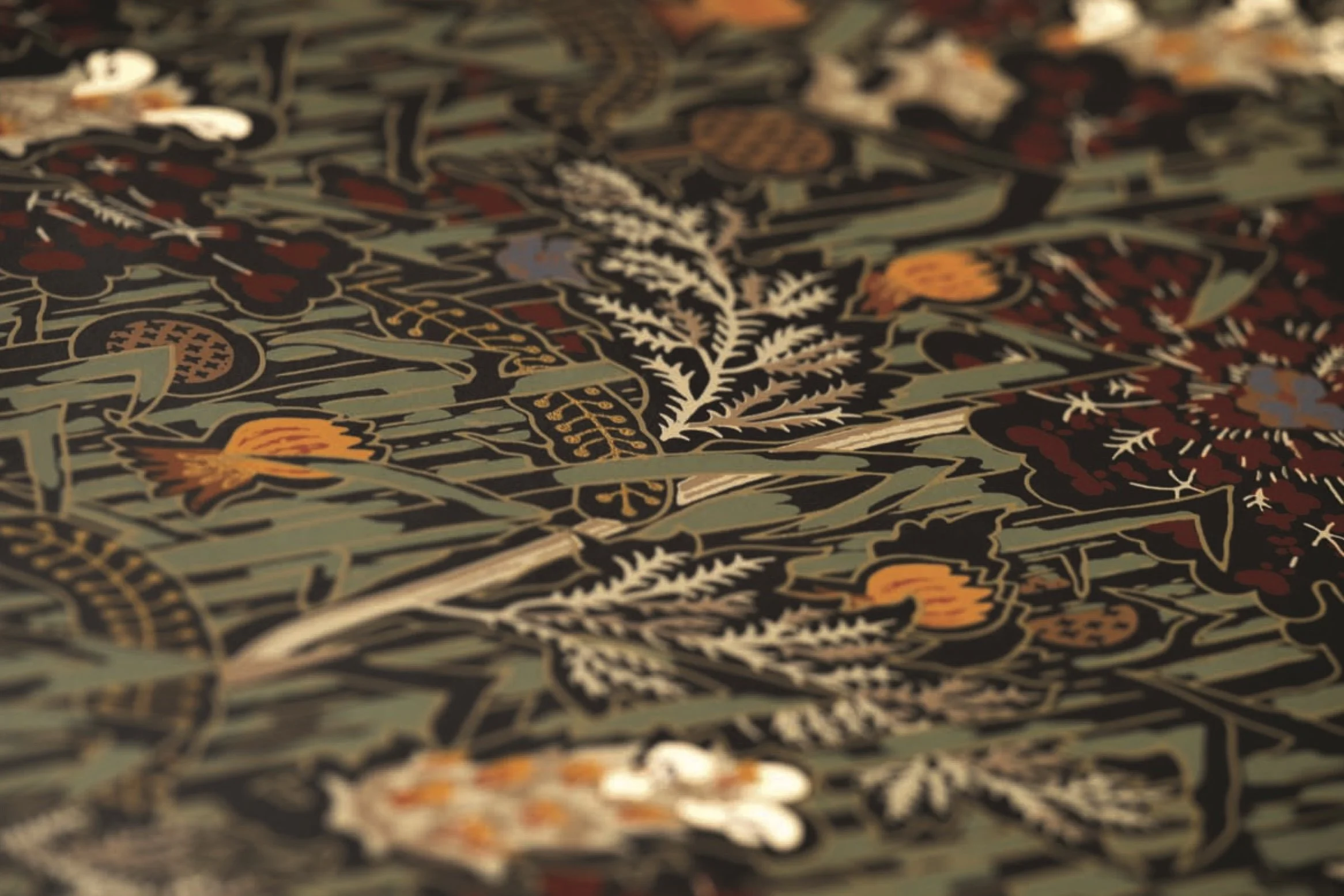
Through this spring, Patterned World: The Wallpaper Art of Charles E. Burchfield will be on view at the Burchfield Penney Art Center.
It’s a celebration of the reintroduction of The Birches, the first pattern designed for Birge in 1921, and Red Disk’s fifth Burchfield wallpaper. The exhibition, co-curated by Red Disk and the Burchfield Penney’s Tullis Johnson, invites visitors to explore Burchfield’s wallpaper patterns and the work that influenced them.
While Red Disk’s wallpapers are art, they are also commerce. For their clients–from artists and interior designers to curators and homeowners–every roll of wallpaper is an opportunity to embrace the story each pattern tells. “Restoration isn’t just about making old things new again,” Grunert says. “It’s about hearing a story–or seeing a pattern–and making it part of your own.”
in print