
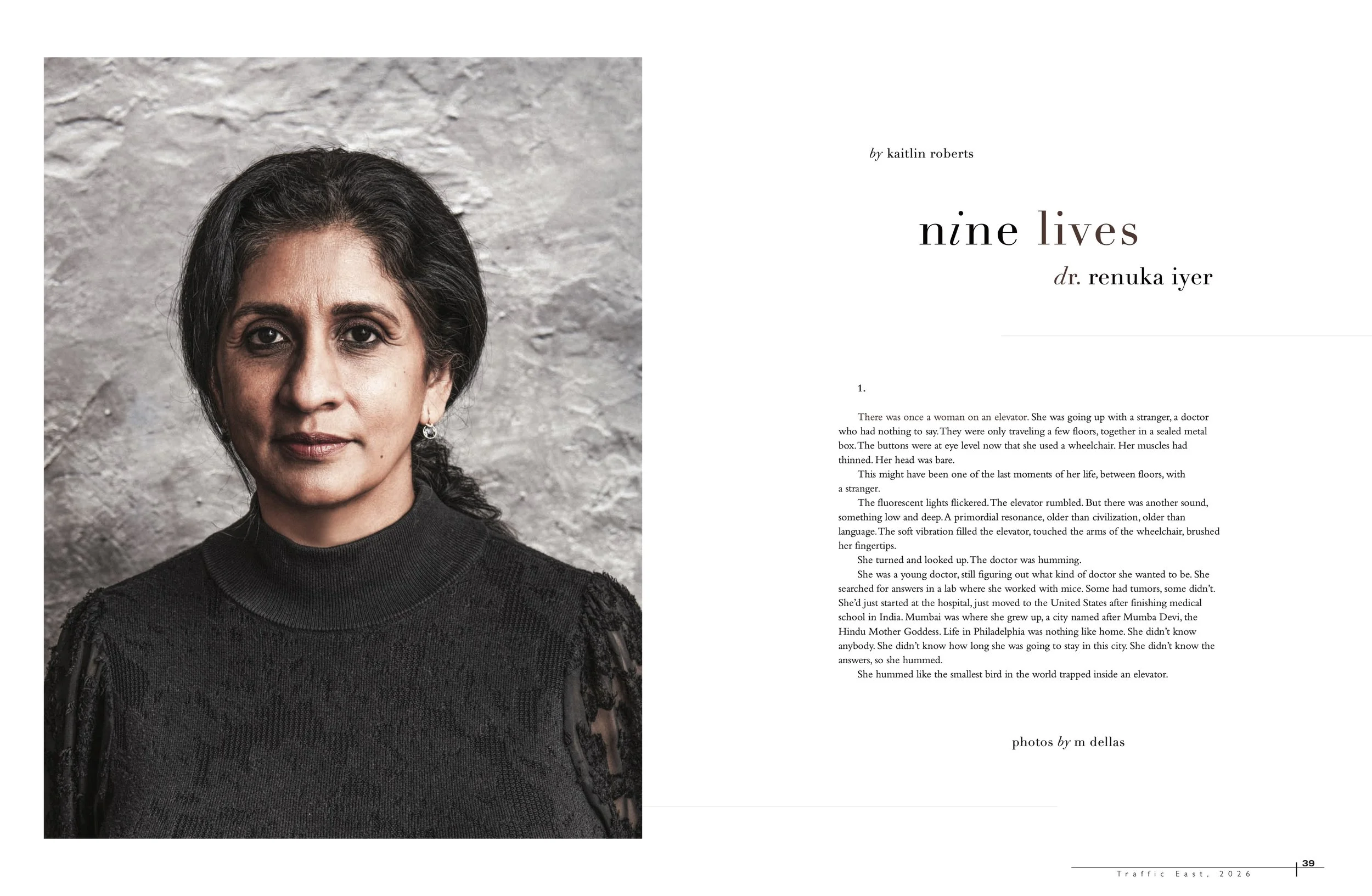
nine lives: dr. renuka iyer
1.
There was once a woman on an elevator. She was going up with a stranger, a doctor who had nothing to say. They were only traveling a few floors, together in a sealed metal box. The buttons were at eye level now that she used a wheelchair. Her muscles had thinned. Her head was bare.
This might have been one of the last moments of her life, between floors, with a stranger.
The fluorescent lights flickered. The elevator rumbled. But there was another sound, something low and deep. A primordial resonance, older than civilization, older than language. The soft vibration filled the elevator, touched the arms of the wheelchair, brushed her fingertips.
She turned and looked up. The doctor was humming.
She was a young doctor, still figuring out what kind of doctor she wanted to be. She searched for answers in a lab where she worked with mice. Some had tumors, some didn’t. She’d just started at the hospital, just moved to the United States after finishing medical school in India. Mumbai was where she grew up, a city named after Mumba Devi, the Hindu Mother Goddess. Life in Philadelphia was nothing like home. She didn’t know anybody. She didn’t know how long she was going to stay in this city. She didn’t know the answers, so she hummed.
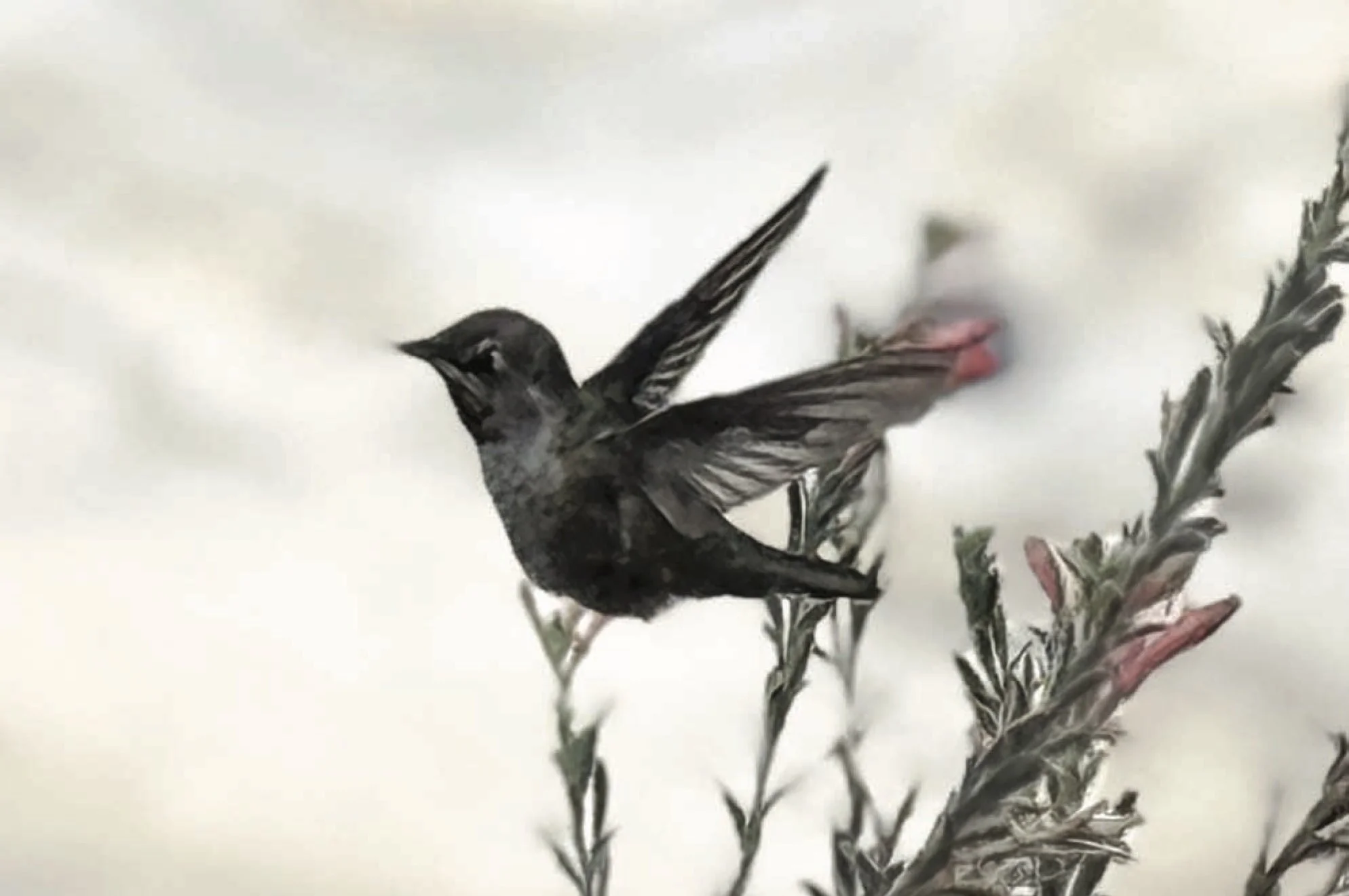
She hummed like the smallest bird in the world trapped inside an elevator.
The woman in the wheelchair listened. Then she asked the doctor a question.
“Do you know why the hummingbird hums?”
Suddenly, the vibrations ceased. The air settled. The doctor froze.
She hadn’t realized she was humming. That she was practically singing. She’d been somewhere else, the future or the past, Mumbai or Philadelphia, far from the elevator. The doctor stared back. Her mind fluttered. But she had nothing to say.
The bald woman smiled.
“Because it doesn’t know the words,” she said. “Like you!”
Then she laughed and wheeled out of the elevator.
The doctor, Dr. Renuka Iyer, remembered that laugh for decades. Twenty-five years later, she still thinks about the woman’s words.
She had studied all her life, long days and late nights in hospitals and labs searching for answers. And that day in the elevator, she found one.
Renuka knew what kind of doctor she wanted to be. She wanted to surround herself with people who were alive in ways she was not. People who were present. People who noticed the hum.
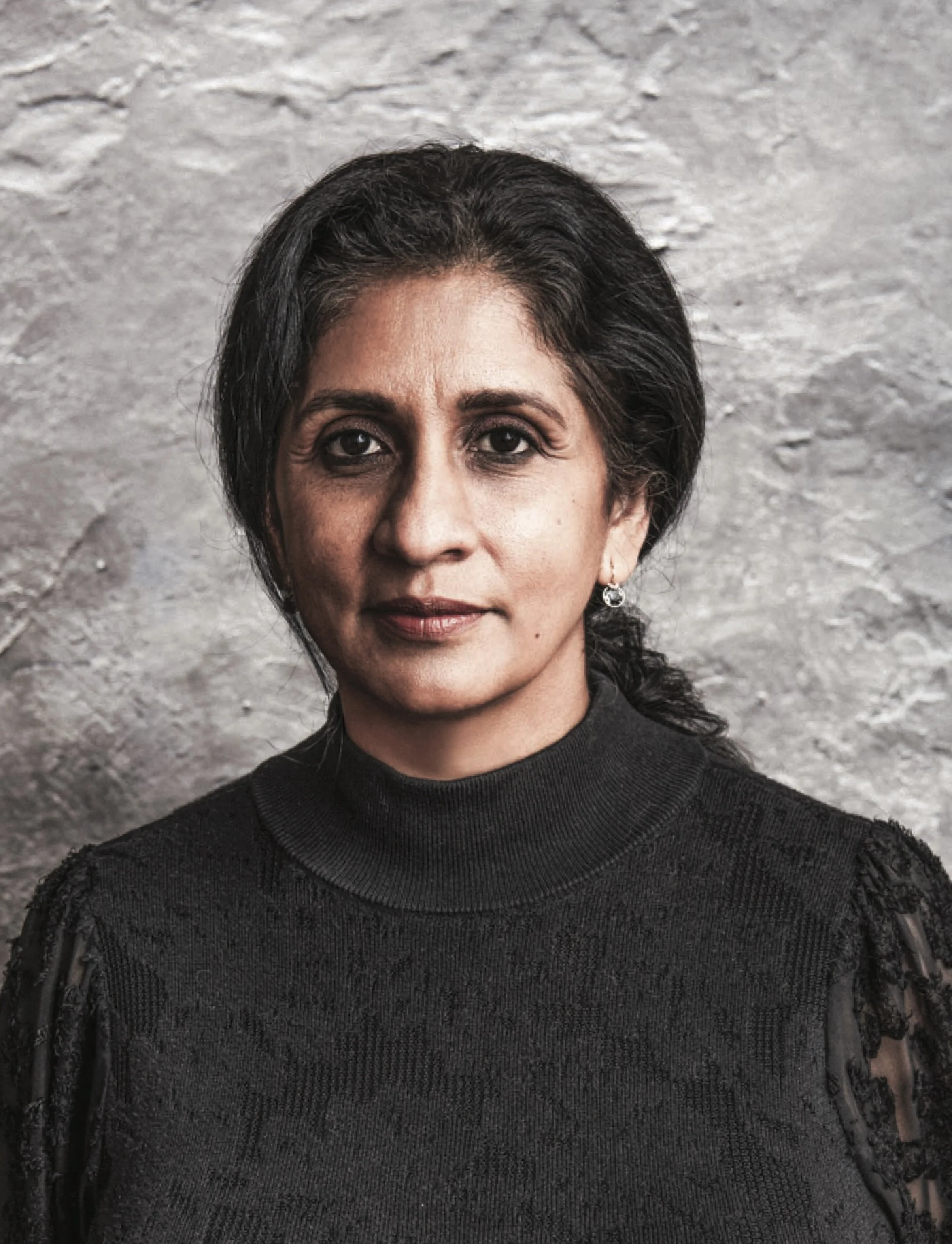
photos by m. dellas
2.
Not everyone laughs at the end. Some rage. Some bargain. Some are like Judy.
For twenty years, Judy taught eighth-grade English. Stories about tigers burning bright, gifts in the knothole of a tree, two friends who dream of a farm where they’ll live with pet rabbits.
At home, she watched hummingbirds sip sweet water from the feeder. Their wings beat seventy times per second, faster than her wheels could glide through Buffalo, along the Niagara River.
She liked to ride her bike, but sometimes her leg hurt.
“The tumor was causing her leg to swell,” Renuka says. “I wanted her to have surgery.”
Judy agreed. The surgery worked. She biked again.
But a year later, Renuka gave Judy the news.
“I couldn’t make eye contact with her,” Renuka says. “I was just looking down, and I was feeling very bad. We put her through the surgery, but it came back.”
Judy looked Renuka in the eye. “I know I am writing the last chapter of my life.”
She was an English teacher so she could say things like that. She knew what it meant to reach the end of a story. That Christmas, Judy gave Renuka a pen with an engraving: Thank you for being my co-author.
Renuka keeps it on her desk. It reminds her that even at the end, the story keeps being written.
3.
He answered around 7:30pm.
“I’m going to the diner,” he said. “I’m gonna get a nice steak.”
Renuka was still at the office, after hours, under humming fluorescent lights. She’s called because she just got the results: his cancer is back.
“I kinda thought so,” he said.
She told him about the fluid in his lungs, the time left. Her voice cracked.
“You sound pretty sad,” the man said. “What are you gonna have for dinner?”
This was not the question Renuka expected. She didn’t know what to say.
“Well, what makes you happy?” he asked.
She traced the map of her life, from hospital cafeterias in Philadelphia and New York City, to her new home in Buffalo where guests leave with plates of something warm, to Mumbai where her father always said that the way to stay in someone’s heart is to cook for them. He was a good cook, and in her memories, she found something that made her happy.
“Shrimp,” she said, her voice steady.
“Then maybe you should go have shrimp,” he said. “It’ll cheer you up.”
Renuka said she was supposed to be cheering him up.
For a long moment, neither spoke. Only the hum of the phone line. Then he told her his story.
“I’m the youngest of five boys.” While his mother was pregnant, she was diagnosed with breast cancer. “She had the choice, you know, of giving me up or treating her cancer.”
She chose her son.
“My older brothers basically raised me,” the man told Renuka. “And so I have always felt that this life was really not mine to begin with.”
Every birthday felt like extra time.
“I have no regrets,” the man said before they hung up. “My whole life has been a blessing.”
They said goodbye, and Renuka went home. On hard days, she opens the humming freezer where she keeps two, three bags of shrimp. Because you never know.
4.
The hum is always there if you listen.
In the early nineties, Maya fled the war in Bosnia with her young daughter. She crossed a border and arrived in America, holding her children close. They all had to start over.
In New York City, during her medical residency, Maya met Renuka.
Through late nights and long days, they grew close and became friends. They were two women, far from home. They studied, moved, worked, mothered, building their lives in a new world.
Then, Maya got breast cancer. Twenty-nine months of hope and setbacks.
One day, Renuka came to Maya with a question she never wanted to ask.
“What can I do for your daughters when you’re not here?”
Maya didn’t hesitate.
“I just want you to be present,” she said, “And make sure they go for their mammograms.”
Fifteen years later, Renuka has watched Maya’s daughters grow. One became a dentist, one a lawyer. She attended their graduations. She took them dress shopping. She officiated the older daughter’s wedding. Every year, they mark birthdays and Mother’s Day.
And when the daughters get their mammograms, they text Renuka their results.
“Your job is not done when that person you cared for is gone,” Renuka says.
Life keeps humming.
5.
Where did the hum begin?
Mumbai. The thick heat pressed against city streets, and the dry air smelled like exhaust and dust. Renuka grew up inside all the honking and clatter, but every summer vacation, she took a train to her aunt’s house, tucked away from the noise. Renuka spent days climbing mango trees and roaming the orchard where the wind rustled the leaves and the garden hummed with bees.
Her aunt loved the garden, especially her roses. She tended them from small seeds and watched them grow. Renuka learned that joy and curiosity could also be tended.
“You want to make ice cream?” her aunt would say. “Let’s make ice cream.”
Together, they stretched the days until life seemed infinite.
Then, the roses wilted. The ice cream melted. A diagnosis, melanoma, grew around them.
“I don’t think I’m going to make it,” she said.
Renuka was sixteen or seventeen, just beginning to imagine her future as her aunt grew weaker.
“When she got sick,” Renuka says. “I was talking to the doctors, asking a lot of questions.”
Renuka was good at science and math. She was curious about medicine. But no one in her family was a doctor. Her parents could be practical and cautious, but her aunt believed in her.
“She was the first person to say, you should do it,” Renuka says. “Sometimes you need someone to believe in you before you believe in yourself.”
She wouldn’t see the roses bloom but she already knew what a small seed can become.
“Be a doctor,” her aunt said. “Figure out a way so that this doesn’t happen to other people.”
At fifty-four, Renuka is about the same age her aunt was when she died. Her cousins say she looks just like their mother, as if some tiny, tended piece stayed and kept growing.
6.
A hospital is a hive. Not just doctors and patients, but an ecosystem. Researchers hunched over desks. Regulatory staff tackling mountains of paperwork. Cleaners and cooks keep the rhythm. It takes millions of tiny, invisible efforts to heal one life.
Somewhere in this hum, a neurosurgeon at Renuka’s hospital invented a vaccine called SurVaxM, a vaccine that trains the immune system to recognize tumors and fight back. Early results were promising, and Renuka designed a study.
One patient, a young man in his twenties, had a neuroendocrine tumor. He joined the trial.
Years later, a man approached Renuka at work. He was a researcher.
“I don’t know if you know,” he said. “But the patient in your trial is my nephew.”
In the hive of forms and files, Renuka hadn’t made the connection that they shared a name.
The uncle had spent years working behind the scenes, doing research without seeing the lives he touched. This time, he saw it firsthand. His nephew’s life had already been extended by four years.
“It made this work so much more meaningful,” the uncle told Renuka. “For my family. For me.”
7.
It takes time to hear your own hum.
“I never celebrated,” Renuka says of the first nine grants she received as a physician. Nine grants. Nine chances. She never paused long enough.
Then came the tenth grant.
She received it around the time a junior colleague got his first. She took him to dinner to celebrate his win.
“Wait,” he said at the table. “You also got a grant. Why are we not celebrating yours?”
Maybe no one had asked her this before. Maybe she hadn’t even asked herself. For a moment, she froze, like that day in the elevator. But this time, she knew the words.
“We are,” she said. She wanted to celebrate herself, and she also wanted him to not miss the chance like she had. “If you don’t celebrate the wins, your whole life just becomes a big blur.”
Now, every February, she gets together with a group of colleagues who have February birthdays. They call it their birthday dinner. There might be shrimp or ice cream. There’s always something sweet. Everyone digs in, tells stories, sings. Then the hum of voices softens as candles go out.
8.
When Renuka takes off her ID badge and goes home, she becomes someone else.
“I am mom, I am Renu, I am everything else.”
A gardener, a cook, a runner, a dog owner, a mother to her son.
When he was little they used to watch a movie about a clumsy panda named Po, who worked in his father’s noodle shop but dreamed of becoming a Kung Fu Master. One evening–just as Po was about to be shaken out of his dreams by an alarm–Renuka’s son paused the movie.
“You’re not paying attention,” he said.
“I am.” She was sitting right there, no phone or laptop. “Why are you saying I’m not?
He pointed to her forehead. “You know, mom,” he said. “When you think about your work, you get this line. A straight one. Right here.”
Renuka had been thinking about work, paperwork and patients. Her worries had carried her away from the legends of the panda warrior in the noodle shop.
“This is the part of the movie when you always laugh,” he said. “And you didn’t.”
He pressed rewind and a bumbling Po tumbled backward across the screen.
“I realized that he was pretty intuitive,” Renuka says. “And he’s going to call me out.”
Years later, when her son was older, Renuka asked him what he thought his best quality was.
“That I can let go,” he said, without hesitating. “ I don’t dwell.”
He had always been like that, as a child, as a baby and maybe even before, listening to the world that he would soon belong to, soothed by his mother’s gentle, steady hum.
9.
The original hum might have been between a mother and her unborn child. The ancient and universal vocation began long before words, before music. Humans hummed to soothe themselves and strengthen bonds. Humming was threaded through storytelling and rituals. In India, Nada Yoga uses sound vibrations like humming for meditation and healing. Around the world, indigenous communities hum to mark transitions and commune with the divine.
Science confirms what humans always intuited. Humming stimulates the vagus nerve, which reduces heart rate and stress hormones. Humming lowers stress and anxiety, supports mindfulness and improves oxygen efficiency in the body. It’s even helped marathon runners.
All those years ago in the hospital elevator, maybe Renuka’s body knew what her buzzing mind couldn’t hear. Humming brought her into connection and carried her places she never expected.
Last year, she ran a marathon.
“I called it my running and walking tour of Chicago’s twenty-nine neighborhoods.”
She only had fourteen weeks to train and almost backed out.
“And then I thought, I don’t give my patients fourteen weeks of time to prepare for chemotherapy,” she says. “When they’re diagnosed, they have to just jump right in.”
She joined a team. All of the other runners were caregivers. Renuka was the only physician. When everyone shared their motivation, she thought of something a patient’s wife once told her.
“Even the rockiest roads will lead somewhere,” the woman said. “I just don’t know where, but I believe it’s somewhere good.”
Training wasn’t easy, but together her team raised $110,000.
“We can fund an entire grant,” Renuka says. “Not one of us could do it on our own.”
They came together before dawn, on a crisp October morning. They ran down Columbus Drive, past Grant Park, into the Loop, weaving through the city streets. Renuka wore a t-shirt with the names of all of her patients written on her back. Even if they weren’t there, they kept her going.
“You can’t see all of them,” she said. “Some are the wind behind you.”
More than fifty thousand runners carried each other to the finish line. They moved together in the rhythm of their shoes and the rise and fall of their breath.
And in the wind, the hum carried on.
in print
Renuka Iyer, MD is a Vice Chair in the Department of Medicine and Section Chief of GI Medical Oncology at Roswell Park Comprehensive Care Center, RoswellPark.org. She has been recently been named the New Chief Medical Officer for National Comprehensive Cancer Network, NCCN.org.