
looking upstream
Fifty years after the earliest curbside recycling programs were established in the United States, we still find ourselves at the kitchen sink pondering whether this or that container belongs in the recycling bin, how clean it needs to be, and, for the more skeptical among us, where it’ll really end up.
As such simple questions confound consumers, bigger challenges confront bigger players in our recycling system. How do institutions fund, build, and maintain the infrastructure, standards, and policies the twenty-first century demands if the recycling system is to reach its full potential as a catalyst for economic growth and environmental conservation?
Enter Van Dyk Recycling Solutions (VDRS). The small company, from its Norwalk, Connecticut, headquarters, is a quiet force for progress in North American recycling.
Founded by Dutch brothers Pieter and Erik Eenkema van Dijk in 1984 under the name Van Dyk Baler Corp., VDRS has spent more than four decades bringing proven, high-performance European equipment and technology to North America. Today, their systems are at the center of the most successful recycling operations across the continent, fueling municipal and commercial facilities from New York City and Toronto to Los Angeles and in hundreds of cities between them.
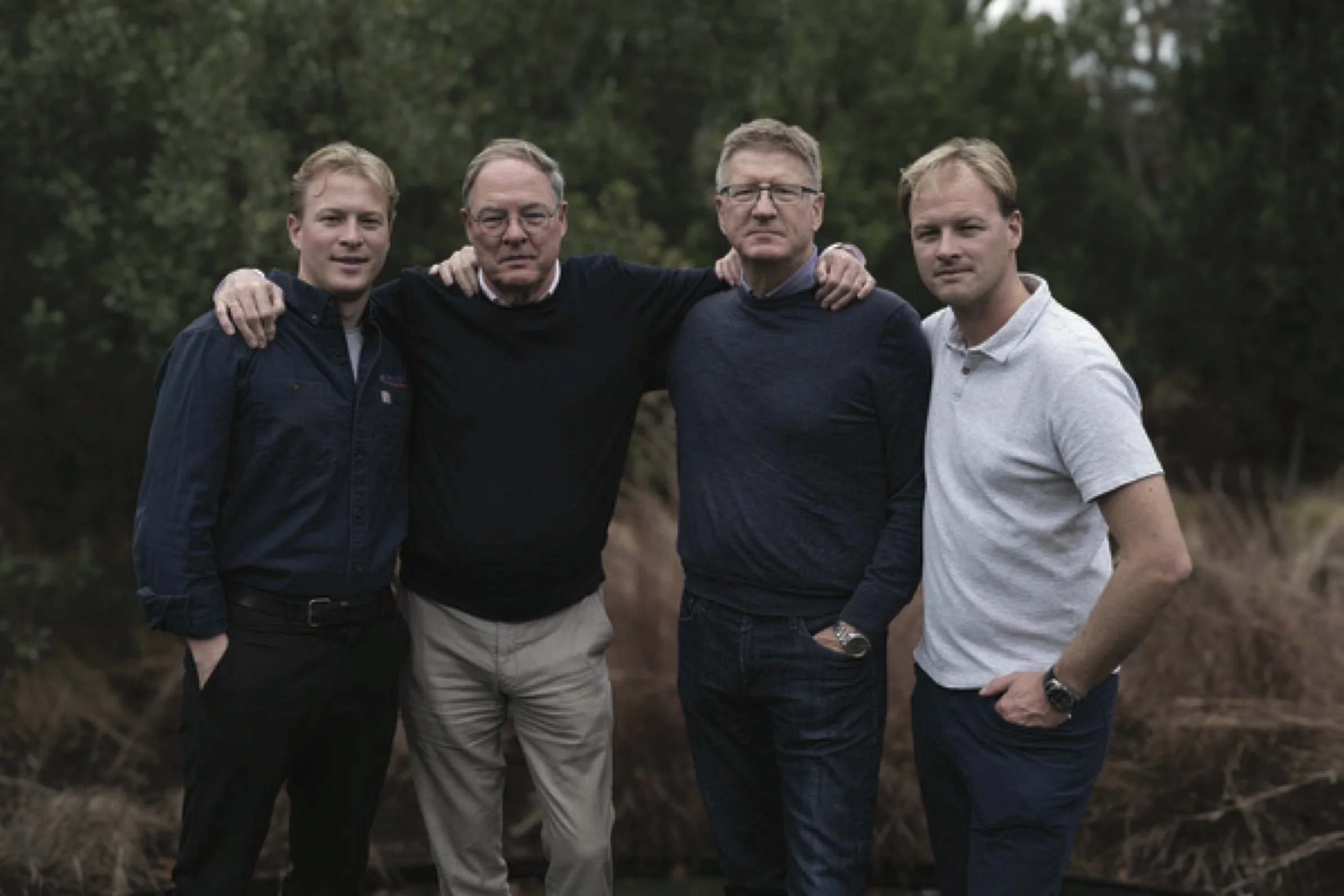
In 1984, Pieter Eenkema van Dijk–then a 23-year-old fresh out of school with master’s degree in economics–moved from Holland to New York City to establish a North American market for Bollegraaf Recycling Solutions. He founded the Van Dyk Baler Corp. out of his apartment in Queens, recruiting his younger brother Erik shortly thereafter.
At the time, most American facilities relied on small, low-volume, vertical balers and manual sorting. Bollegraaf, by contrast, manufactured horizontal balers, common in Europe but virtually unknown in America. These larger machines were designed to process (literal) tons more recyclables than their vertical counterparts, more efficiently and with the benefit
of automation.
The brothers spent their first years in the United States traveling across the country, taking a hands-on approach to educating and supporting recycling facility managers and operators through the implementation and maintenance of their equipment.
“What was very important for us, what is still our strength, was the service part,” Erik says. “At the beginning, when a machine was down, [Pieter and I] would just drive to the client, pull on coveralls, and climb into the machine to fix it. So the focus on service has been dramatic and is, I think, one of the biggest reasons for our success.”
Among their earliest clients the brothers earned a reputation not only for superior equipment that consistently surpassed production expectations but also for that unmatched commitment to service. That reputation fueled the rapid growth of their small family operation.
Throughout the 1990s and into the 2000s, the Eenkema van Dijks expanded the scope of their product line from balers to complete recycling systems to meet the growing demands of a rapidly evolving recycling industry. These systems were designed to last decades, to handle ever-higher volumes of recyclables, and to process mixed materials.
When the Eenkema van Dijk brothers arrived in the United States in the mid-1980s, dual-stream recycling was the norm for contributors to the not-quite-ten percent of municipal solid waste (MSW) that was recycled. Dual-stream recycling requires source separation, where consumers and businesses separate their own recyclables–think paper in one bin, plastic in another.
In the 1990s, the Eenkema van Dijks helped pioneer the single-stream model in North America, allowing everyday consumers to place all of their recyclables–cardboard boxes, plastic bottles, aluminum cans–into a single bin for pickup.
The single-stream model made recycling much more convenient than it had been to that point; the 90s and 2000s saw MSW recycling rates rise to twenty percent by 2000 and twenty-six percent by 2010.
But with the rise in participation came new challenges for the industry,particularly increased contamination. “Contaminated” recycled waste makes sorting more difficult and can degrade the quality of the materials recycling produces.
“The problem is,” Erik explains, “people want to recycle but they’re guessing. Toothbrushes, plastic bags–they throw them in and hope for the best. That’s not how the system works.”
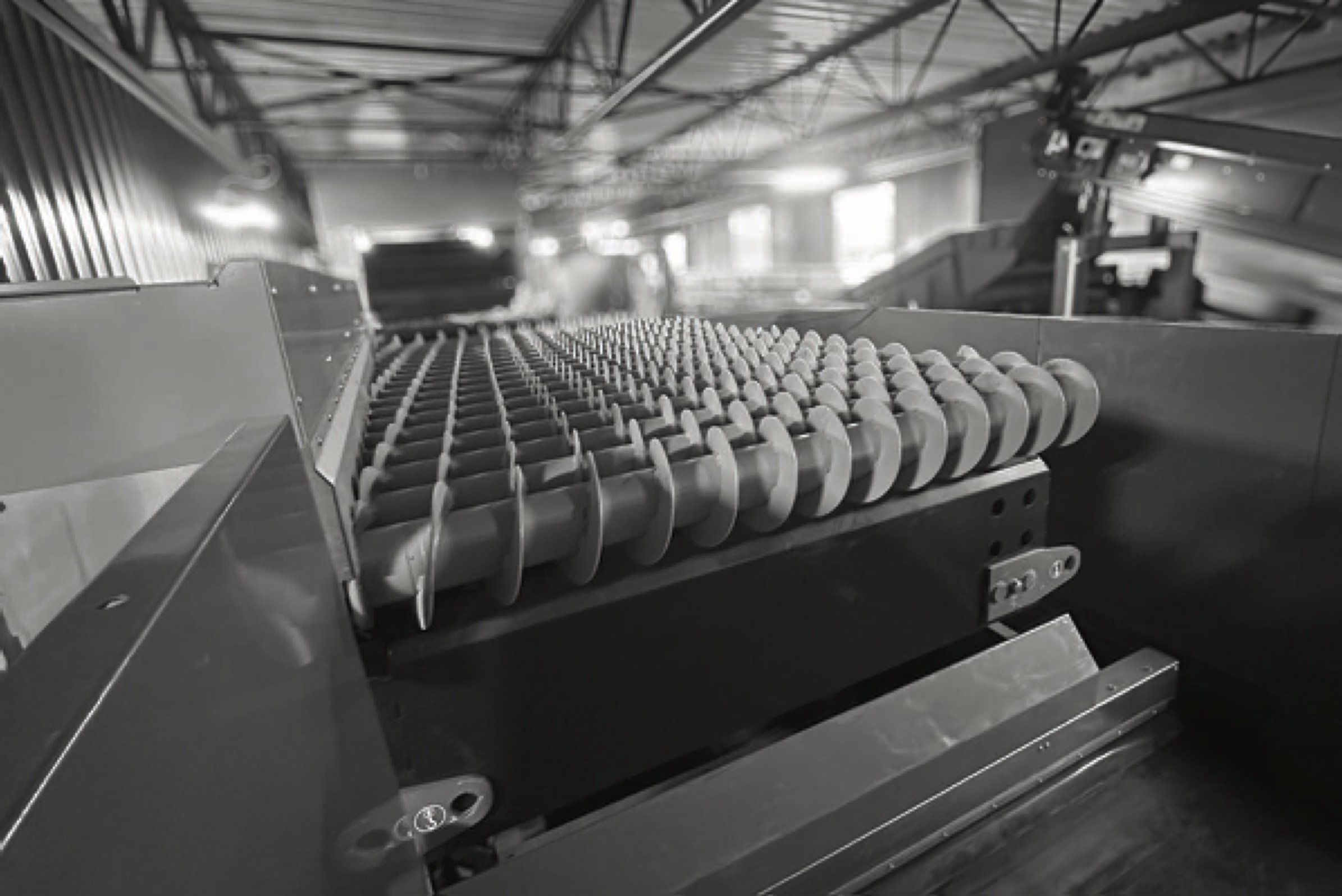
Van Dyk enhanced its equipment, introducing increasingly advanced European technologies to the United States. Their product line grew to include automated screening machines, which were augmented to handle more complex mixed recyclables and then upgraded with optical sorting technology, which leveraged near infrared recognition to differentiate one type of plastic from another and process and sort materials at high volumes.
“We were seen as the innovators,” Pieter explains, “because we brought a lot of new techniques and new ideas to the market. But everything that happened here happened five years earlier in Europe, of course on a much smaller scale.”
The innovation offered by Van Dyk was the scaling, and the approach to business that made it possible. The North American market was and is massive, and unique in its challenges, compared to Europe’s, even with lower MSW recycling rates. The care and attention Van Dyk put into every facility–through implementation to maintenance to growth and optimization–enabled the most innovative technologies to succeed, and to last.
“We take what’s been tested and proven in Europe,” Pieter continues, “and apply it to the United States, adapting it for local realities.”
Massive warehouses that could house the parts for a continent’s recycling systems replaced the residential garage where the brothers had once stored their balers’ spare parts. Bigger and bigger office spaces replaced the apartment that had once served as headquarters for Pieter’s one-man operation.
Eventually, in 2012, Van Dyk Baler Corp. rebranded and became Van Dyk Recycling Solutions–more fitting for the breadth of products and services the company was offering.
In 2025, VDRS supplies, implements, and maintains the best in European recycling and waste management equipment and innovations–balers, screens, optical sorters, density separators, food de-packagers, dust and odor suppression systems, battery recycling technologies–to municipal and commercial clients across North America. Most recently, they’ve partnered with London-based Greyparrot A.I. to integrate artificial intelligence-based solutions with their systems.
Van Dyk enables clients to process and recycle everything from cardboard and plastic to electric vehicle batteries and electronics waste to organics. (With VDRS systems, organics can even be processed and recycled into fuel and energy: “You make energy from old banana peels. It’s not glamorous–but it works, and it matters,” says Erik.)
“We started at twenty-three–my oldest son, Maarten, is now 33,” Pieter says. “But the business was a few hundred thousand dollars then. Now it’s a few million–it’s a different business.”
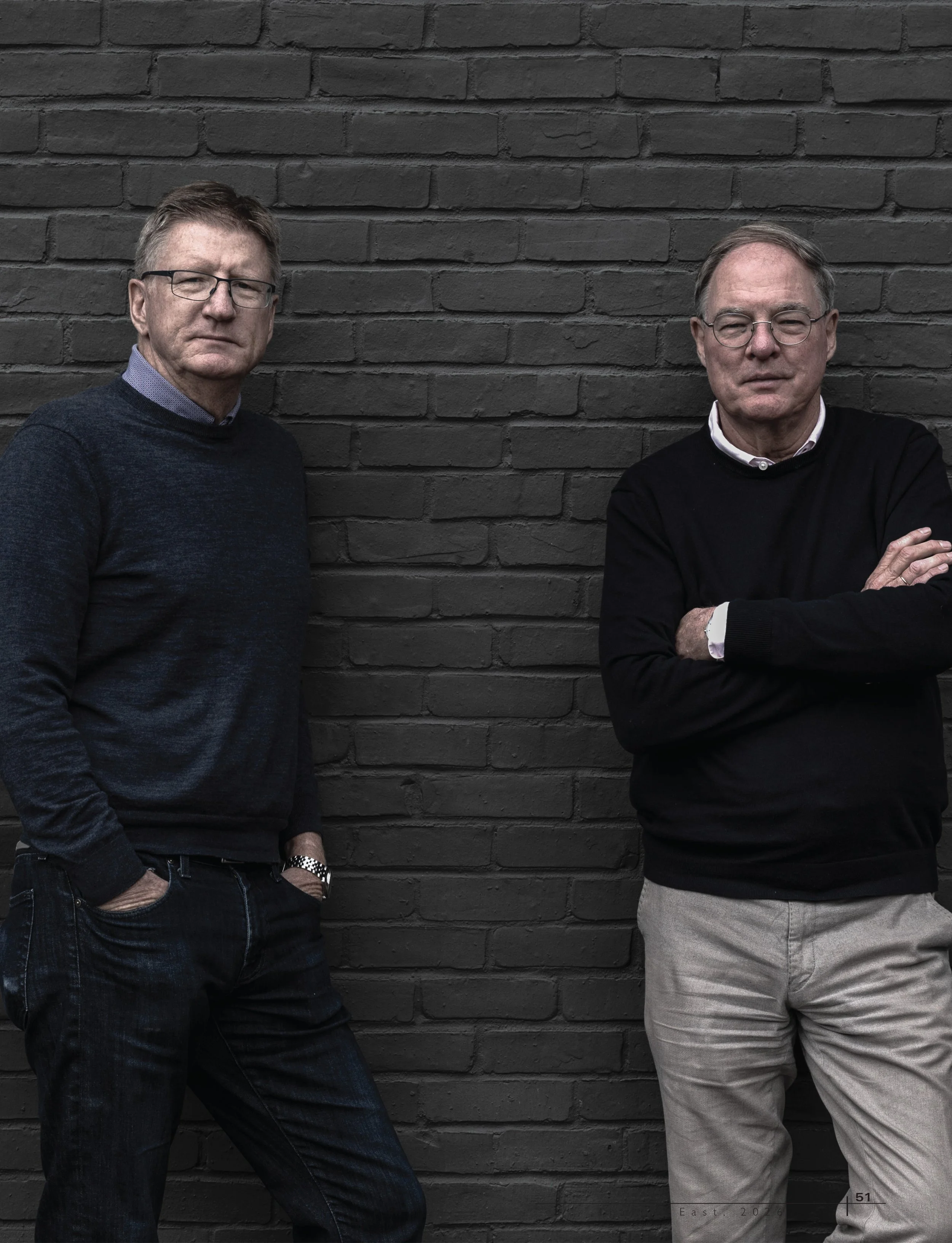
Maarten, Pieter’s eldest son, became the first member of a new generation of Eenkema van Dijks at VDRS when he approached his father in 2017 about joining the business. He’s worked his way up to his current position as Director of Operations over the last eight years. Five years later, Pieter’s younger son Florian followed in his brother’s footsteps when he, too, approached his father.
“I think it was always in the back of my mind. It was never a requirement, but it was always there,” Florian says of joining the family business. When he called his father to ask if now was the time to join, Pieter’s response was a resounding yes.
“There are so many interesting things going on now–the technology gets better every year, and the pace of it is increasing,” Florian says. “But I also wanted to overlap a little bit with [my father and uncle]–I thought it’d be cool to spend time working here while they’re here too.”
In his first year, Florian “did every job,” spending time in the warehouse, in accounting, and in logistics before settling into the sales position he holds now.
“I did service for a few months, too,” he says. “Half of our company is service technicians, installing and building, erecting these massive facilities. So I spent a lot of time with them, which I really liked, getting to know everybody there.”
It’s reflective of the broader value system that built VDRS that Florian, like his father and uncle in the company’s earliest days, spent his first year in these hands-on roles, getting to know the ins and outs of how everything works, and who everyone is.
Pieter are Erik are pleased to have a new generation of family on board.
“I strongly believe in this as a family business,” Pieter says. “And, really, we run the whole company as a family, right?”
The concept of work as “family” has become something of a punchline in the United States to jokes lobbed at corporations selling flashy perks to potential employees.
But Van Dyk doesn’t seem to fit that narrative.
The company’s 120 employees–from sales and operations to service and maintenance–make it possible for VDRS to continue providing the high level of service on which they built the business back in the 1980s and 90s on an exponentially larger scale, ensuring the company’s reputation for quality, care, and trustworthiness is upheld.
Pieter and Erik have nurtured a company culture reflective of their own values–community, trust, reliability. Values ubiquitous in Dutch culture but perhaps less so in corporate America.
They know the name of every single person who works for them. Understanding that many of their staff spend most the year traveling from client to client, they make sure to bring the entire company together at least once a year for a mix of business and leisure inclusive not just of their employees but also of
their families.
It’s deeper than a company party, though–the employment benefits VDRS offers are almost unheard of here: health insurance is fully paid (deductible and all); a profit-sharing pension plan pays ten percent on top of employees’ salaries (in contrast to the traditional 401k, where a salary deduction might be matched by the company); mid-year and holiday bonuses and wage increases are the rule, not the exception.
“We realized that we are nothing without our people, right?” Erik says. “Our people really make the business.”
“They go through the fire for us,” adds Pieter.
“So we try to give back,” Erik concludes, “because they give so much to us.”
Though neither brother characterizes their finding their way into recycling as necessarily a direct result of some passion for environmentalism, they were perhaps always destined to build their lives around giving back to the planet.
The Eenkema van Dijk family shares a generations-long love of the water; Pieter and Erik spent their childhoods visiting their parents’ small lake house, where they learned to swim, sail, and really appreciate nature and community. They’ve passed all of these lessons down to their own children, who are sailors themselves and active in their communities.
Today, Pieter works closely with SoundWaters, a nonprofit that advocates and acts for the resiliency of the Long Island Sound through environmental education. Their teaching resources and youth programs help students from pre-kindergarten through high school understand the environment, and the impact they can have on it.
As a member of SoundWaters’ board, Pieter and VDRS joined the organization’s One Million Bottle Caps initiative, which saw middle school students collect millions of plastic bottle caps, which were then processed at VDRS’ test center, and recycled into new products.
“It’s meaningful for me to be involved,” says Pieter, “and it’s very good for these kids to see this process, to see the impact a small act can have.”
As Pieter contemplates his future and the company’s, with plans for Erik to succeed him as CEO and eventually for the next generation of Eenkema van Dijks to take over, his vision for VDRS remains clear–it’s much more than a business; it’s a legacy of service, innovation, and environmental stewardship.
Beyond the machinery, the sales pitches and contracts and profits, he sees his essential task, the impact his life’s work has had, and will have, on the world.
The challenges facing the recycling and waste management industry are only growing in their complexity with the convergence of evolving legislation, shifting markets, and an ever-increasing urgency around the protection of our planet’s resources.
But VDRS has always kept up, steadily expanding its expertise in the most advanced recycling solutions, from organics processing and modern sorting technologies to artificial intelligence
and beyond.
The company is well-positioned to lead the industry forward in meeting its challenges.
Van Dyk is ready for what’s next.
More about Van Dyk Recycling Solutions at vdrs.com.
in print