
cool ride
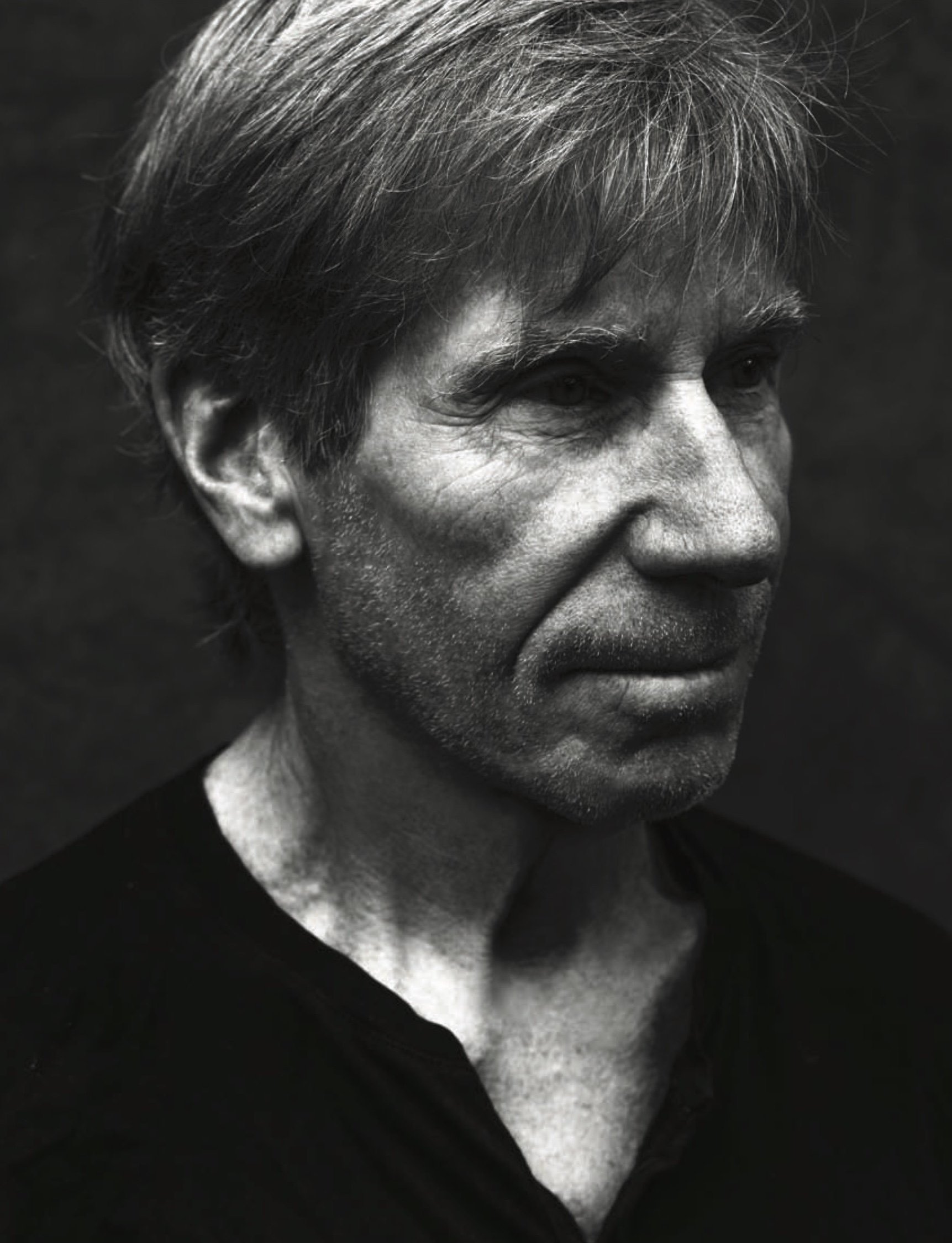
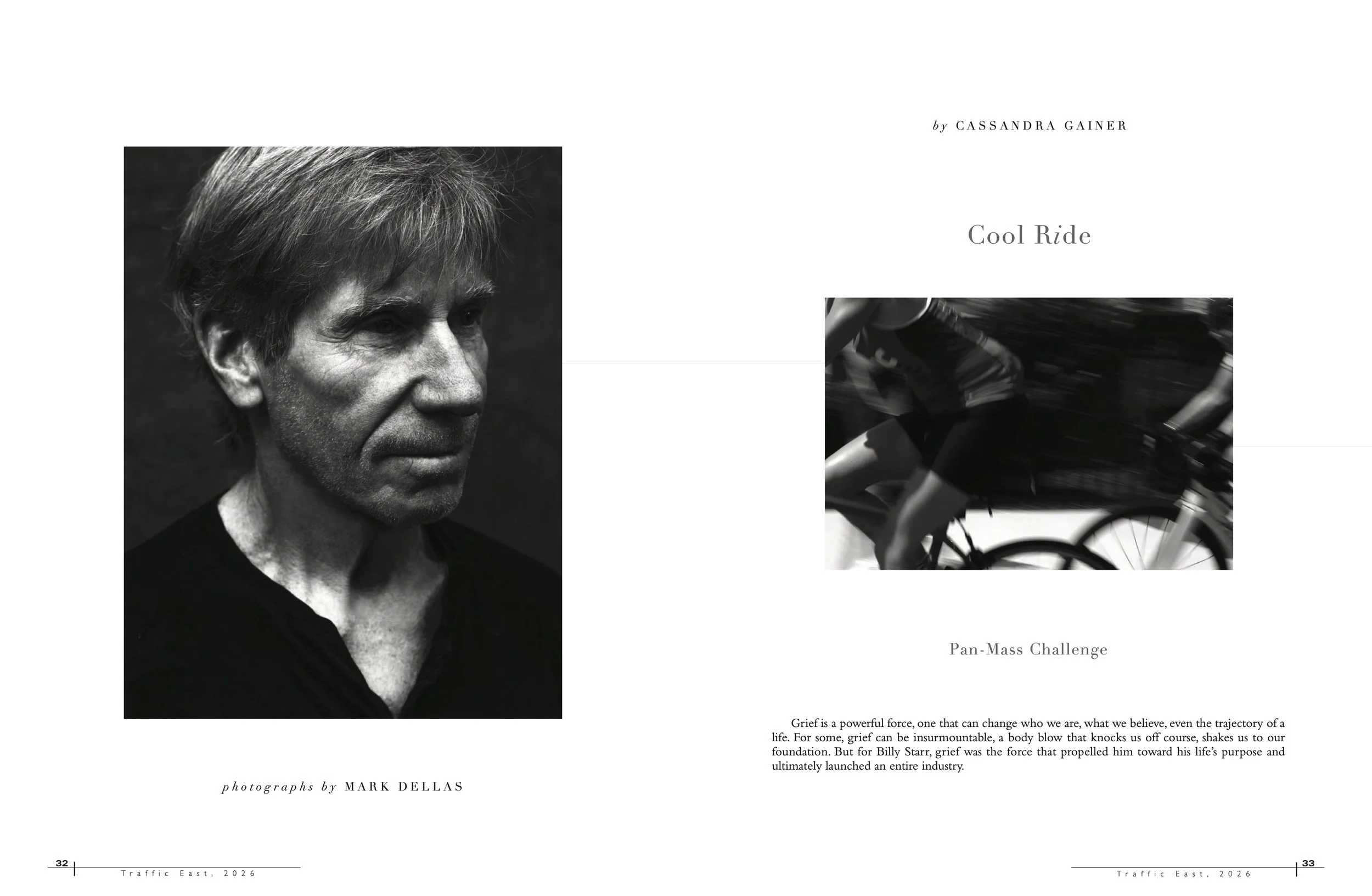
Grief is a powerful force, one that can change who we are, what we believe, even the trajectory of a life. For some, grief can be insurmountable, a body blow that knocks us off course, shakes us to our foundation. But for Billy Starr, grief was the force that propelled him toward his life’s purpose and ultimately launched an entire industry.
“My young twenties rocked my world. I lost my mother, uncle, and cousin in quick order,” Starr said, explaining the years following his mother’s death from melanoma in 1974, when he was just twenty-three years old.
photos by mark dellas
An athlete, Starr worked through his grief by staying in motion, hiking the Appalachian trail with friends and cycling the familiar roads near his hometown of Newton, Massachusetts.
“It was about 120 miles,” he explains. “Massachusetts has a unique geography where you can actually bike across the state, go from the hills of central Massachusetts to the tip of Cape Cod, and end with only a three-hour boat ride back to Boston. I did this for two or three years. Then, in April 1980, I had an epiphany while watching a sunset over the Arnold Arboretum, a beautiful park in the Boston Brookline area.”
The epiphany? An idea for a cross-state cycling event that would raise money for cancer awareness, research, prevention, and treatment.
Starr was a fan of Boston sports so he immediately thought of the Jimmy Fund, the official charity of the Boston Red Sox.
“I took the idea of a cycling event for cancer to the Jimmy Fund, the fundraising arm of the Dana-Farber Cancer Institute,” Starr explains. “I met a woman there named Joanne Goldberg, and she says to me, what’s your goal? And I said, my goal is to raise money.”
In year one there were thirty-six riders, mostly Starr’s friends, and they raised just over $10,200 riding from Springfield to Provincetown, Massachusetts.
“That first year in 1980, it was 220 miles,” Starr said. “And let me tell you, everything that could go wrong did. Everyone got lost. We ran out of food. The ferry ride home was cancelled. After that, I definitely was not planning for year two. In fact, on the bus ride home I was thinking–Jesus, they must all want to kill me.”
“But do you know what I kept hearing?” Starr asked, incredulously. “Next year. Next year. Next year. You know–next year, I can help. Or, next year, we should do this, we should do that.”
Stunned that the challenges of the day had not eclipsed his friends’ enthusiasm for what they had accomplished, Starr began to realize he may have hit on a winning concept.
“Suddenly, I realized that I could give back, and I understood how much that meant as both an athlete and as someone who had lost loved ones to cancer,” he says. “What I didn’t understand was that I was about to create an industry.”
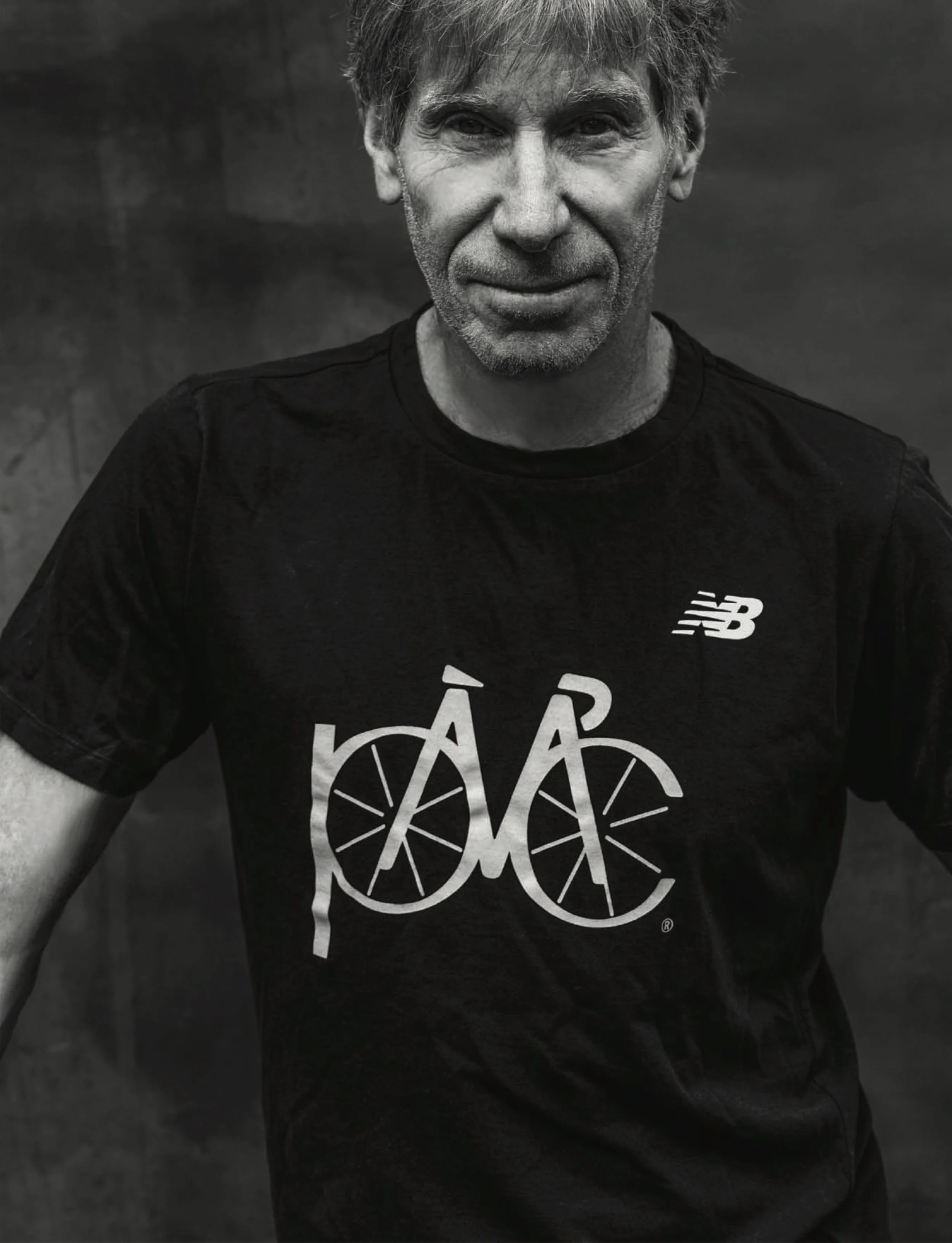
Industries, however, are not built quickly, or easily. For over a decade, the Pan-Mass Challenge, or PMC as it is now known, was a one-man operation led by Starr, who ran it from his father’s house, sometimes sleeping in a tent in the backyard.
Starr was all in, but not everyone could see the vision. He recalls, after the first PMC, returning home, still on a high after the weekend, telling his girlfriend that there would be no plan B–the PMC would be his life’s work. “Grow up,” she told him.
“She did provide a certain kind of negative reinforcement,” Starr says, laughing. “But, really, there wasn’t a plan B. I was twenty-nine years old. I was not married, I lived at home. No girl was seeing me as a great date. I had no money. But this lit me up.”
It would be a decade before the PMC really hit its stride and raised a million dollars in one year.
“In the beginning I said, with ego and innocence–I think I can make this big. But I didn’t know at the time what big meant,” Starr admits. He didn’t know at the time just how widely his mission would resonate.
“As it turns out, my story and my loss are not special. What I’ve done with it has turned out to be special. But cancer is everyone’s story.”
Today, the PMC raises more money than any other single athletic fundraiser in the country. In 2025, with 6,500 riders from forty-three states and twelve countries, the PMC raised $78 million, the largest single donation the Dana-Farber Cancer Institute has ever received.
“I mean, the Boston Marathon is a nice little event, twenty-six miles of people and sneakers. This is much bigger, much more danger, much more excitement,” Starr says, a bemused smile spreading across his face. “Today, I’ve diversified the PMC to fifteen routes, forty-seven towns and 370 miles of infrastructure. Over three hundred thousand people donated last year and I am doing this with sixteen of us full time, another fifteen professional volunteer staff handling the logistics, and four thousand volunteers. It’s a military scale. It’s huge.”
And in 2024, another milestone.
“Accumulatively, we passed a billion dollars,” Starr says. “And we have the potential to be even bigger. It took forty-five years to do the first billion, it ought to take twelve years to do the second billion–and that’s progress!”
Starr may be racing toward his second billion, but he is adamant that the PMC is not and never will be a race, a fact he insists is fundamental to its success.
“We acknowledge how much money you raise, but this has never been a race. I’ve never marketed it as such,” Starr says. “As an athlete, I understood that there is a physical goal for something, but a higher cause made sense to me. That’s kind of the special sauce, really. It’s competitive, sure, but there’s a selflessness to it as well because you’re not doing it to be the winner.”
The scale of the PMC and its contribution to cancer research is impressive by any measure, but as the world’s first peer-to-peer athletic charity event, its impact on the trajectory of charity fundraising has been staggering. While peer-to-peer fundraising through athletic challenges is ubiquitous now, when the PMC was founded by Starr in 1980 it was a novel, nearly unheard of concept. Now, with the PMC as the original model, thousands of peer-to-peer athletic charity events across the United States raise more than a billion dollars every year.
“Back in 1980, fundraising was all about bingo, black tie, or direct mail.” Starr explained. “Now you can run, walk, swim, bike, or climb for every good cause under the sun.”
As the founder of the oldest and most successful athletic fundraiser in the country, Starr is now recognized as a visionary in the world of athletic fundraising and serves as a consultant to other organizations around the world. He has received accolades, awards, honorary degrees. His project has become a movement, and his one-man operation an organization of many. One thing that hasn’t changed–it still lights him up.
“In the beginning it was an intimate band of brothers and sisters. Now, it’s been replaced by something bigger. It’s literally palpable when you’re seeing thousands of people line the road, when you understand the machinations that it takes and the years that it’s taken to perfect this mass cycling event,” Starr says. “If you were to transfer that sentiment to the cancer community, what comes across is–I’m not in this alone, my family’s not in this alone. Thousands of people participate in multiple roles to try to raise more and more money every year. It’s a visible passion and laser focus that you can see in people.”
This year, Starr is seventy-four years old and the PMC is forty-six. He has spent more than half his life on what started as a sunset epiphany, and has grown to something bigger than his younger self, searching for meaning after loss, likely imagined.
“When I started, did I think we would help to cure and fund the cures for cancer? In some ways maybe I did, but I also recognize that cancer will not end in my lifetime,” Starr explains. “We push the ball forward, you know, better treatments, better models, better outcomes, longer and better quality of life. That’s all anybody can ask.”
Starr insists that the PMC do even more, and he has no plans to stop any time soon.
“This event has not yet reached its potential and there’s no beach or golf course that appeals to me more than this work,” he says, smiling. “And selfishly, you know, I’m very proud of how this has evolved. Who wouldn’t want to keep going?”
So what’s next then? For Starr, it is about staying in motion and focused on the road ahead.
“When you go from the rolling hills through the mist and across the state to the tip of Cape Cod, to cross a bridge at sunrise ...” Starr pauses for a moment, as if savoring the memory. “I’ve been riding bikes for over fifty years and this is a cool ride, you know?”
For more information about the Pan-Mass Challenge, visit pmc.org
in print