
manufacturing the cure
When people think of Buffalo, they think of things being made.
We are the city of grain silos and steel. We helped build the cars that defined American mobility, with Trico wipers sweeping snow and rain off windshields across the country. We made the Fisher-Price toys of childhood, the New Era caps of ballfields, and the Cheerios whose smell still drifts across downtown. We invented what the world calls Buffalo wings–here, they’re just wings. And we pile into the stands for Buffalo Bills games in sideways snow.
Buffalo is a city of makers, defined by a blue-collar grit that shows up everywhere, from the factory floor to the football field.
But today, at Roswell Park Comprehensive Cancer Center, we are rewriting the definition of manufacturing in Western New York. We aren’t making steel or cereal. We are manufacturing living cures.
As the Senior Vice President of Industry Partnerships and Director of the GMP Engineering and Manufacturing (GEM) Facility, I am part of a Roswell Park team, led by Dr. Candace Johnson and Dr. Renier Brentjens, that is helping turn New York State into a global epicenter for cell and gene therapy. With a transformative $30 million investment from Empire State Development (ESD) in our facility, and another $150 million committed to the Long Island Biogenesis Park, the state has made a bold declaration: the future of medicine will be built here.
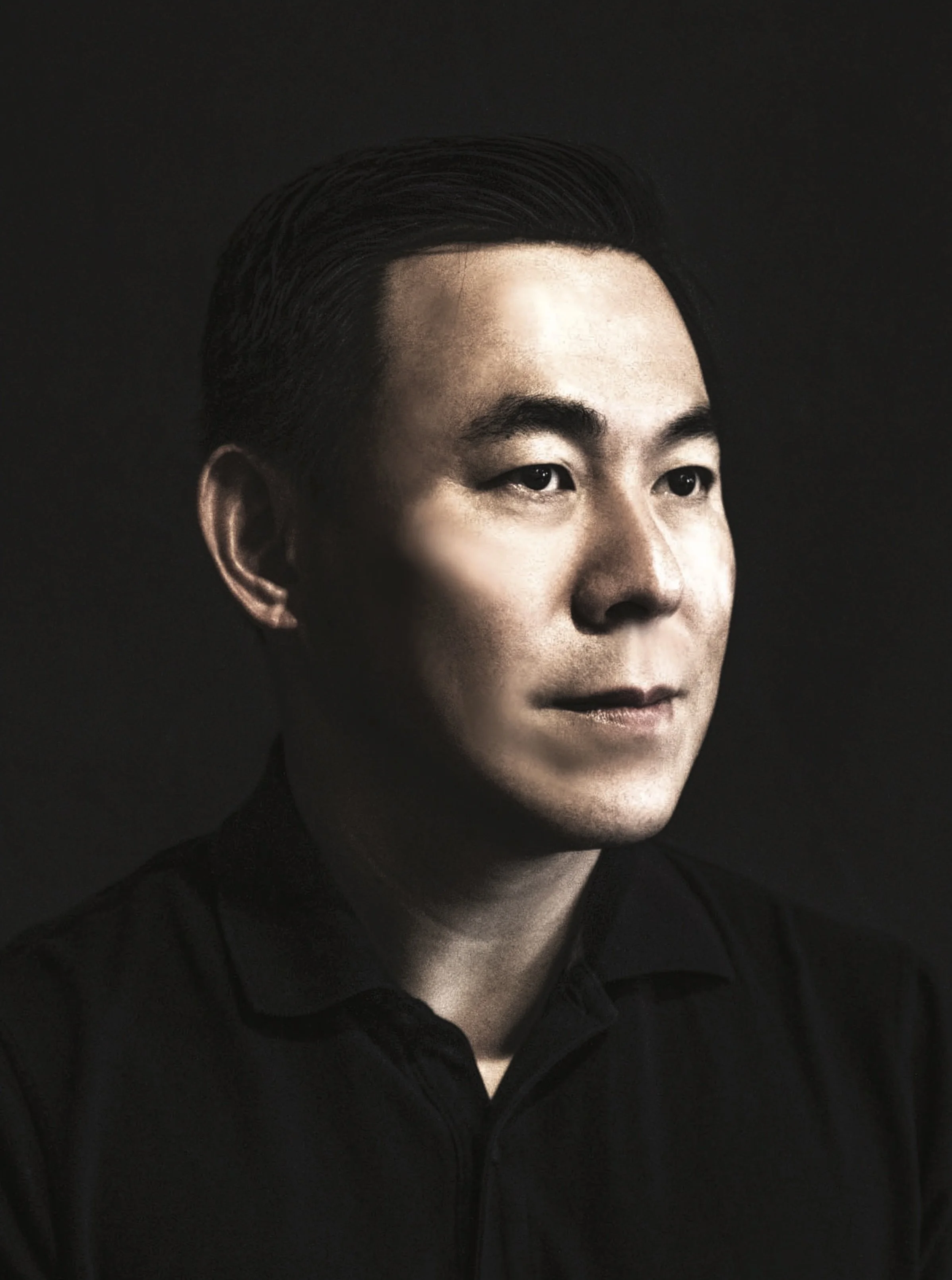
m. dellas
I already believed this future was possible. It’s why I went into this field. But it became real for me because of a letter.
It came from the mother of a child born with ADA-SCID, often referred to as “bubble boy disease”, who had spent his life in isolation because his immune system was too fragile for the world outside. As a graduate student at the University of Southern California and Children’s Hospital Los Angeles, I was part of the team the letter was addressed to, working in an academic GMP facility on the development of an experimental stem cell gene therapy for ADA-SCID.
We knew the science was sound. We knew the mechanism worked in the lab. And after this mother’s son received the therapy we manufactured, he did something that moved the science from a journal page to the real world: he went to Chuck E. Cheese.
To his family, that trip was not a birthday party. It was a miracle. It meant he could finally leave his sterile, enclosed environment and join other kids in a noisy arcade with sticky tables and questionable pizza. It meant biology had stopped being a prison.
In the early 2000s, many still viewed cell and gene therapy as a distant hope. That letter, describing a boy leaving his bubble to play arcade games for the first time, was proof to me that the future we were working toward had finally arrived.
Oddly enough, the story of how that boy got to Chuck E. Cheese begins in Upton Sinclair’s The Jungle.
When Sinclair published his 1906 exposé on the meatpacking industry, the public was horrified not just by the conditions for workers, but by the food itself. The outrage helped drive the Pure Food and Drug Act, the foundation of modern manufacturing standards. The principle was simple: what we put into human bodies must be made with precision and care.
More than a century later, that principle has evolved into Good Manufacturing Practice (GMP) and into something Sinclair could never have imagined. At the Roswell Park GEM Facility, we don’t pack meat. We engineer living cells.
We manufacture CAR T-cell therapies that reprogram a patient’s own immune cells to hunt and destroy cancer. We produce viral vectors that deliver genetic instructions to enhance or repair broken DNA. We create plasmids and antibodies that form the backbone of tomorrow’s medicines. We use phage display to discover new binders. We partner with innovators who are accelerating cures that once sounded like science fiction.
The stakes couldn’t be higher. A contaminated hamburger might make someone sick. A contaminated cell therapy could be fatal. This is manufacturing at its most consequential.
My journey to Buffalo wasn’t a straight line.
I was born in Korea and raised on my grandparents’ farm, a world away from the gleaming cleanrooms I now oversee. My parents immigrated to the United States with little more than ambition. My father worked as a janitor before eventually opening a pet store; my mother was a nurse. From them, I learned that nothing comes without hard work. I learned that you do whatever job is needed for the people you love.
I was always obsessed with how things worked. That curiosity led me to a lab at UC Irvine and later to a PhD at the University of Southern California. I was at USC and CHLA, in that academic GMP facility, when the Chuck E. Cheese letter arrived and my belief in this field solidified.
I eventually earned my MBA at MIT Sloan because I believed that transforming laboratory discoveries into approved medicines would require as much business acumen as scientific knowledge. That belief was tested and validated over my years in industry. At Kite Pharma, I learned how to commercialize cell therapies at scale. At CRISPR Therapeutics, I led a manufacturing development team that contributed to the approval of Casgevy, the first CRISPR-based therapy for sickle cell disease.
These weren’t just career milestones. They were proof points that the science fiction I had fallen in love with as a student had become reality.
Buffalo entered my story in 2010, when Dr. David Hohn, then President of Roswell Park, recruited me to come east. I’ll admit my geography was fuzzy. I assumed that if the job didn’t work out, at least I’d get a trip to New York City.
I was about four-hundred miles off.
But what I found was a community with manufacturing in its DNA. I saw the industrial backbone that had fed a nation and driven American industry, and I saw the resilience that sustained it. The Buffalo Bills’ passionate fanbase reflects a broader truth about this region: people here show up, they work hard, and they don’t quit.
I also found something harder to quantify: genuine kindness.
My first winter in Buffalo, I was shopping for snow tires–a necessity I’d never considered in California. I called shop after shop looking for a specific tire. One salesman, after failing to sell me his store’s brand, simply told me where to find what I needed. “That’s what my wife and I use,” he said. “They’re great.” And he sent me to his competitor.
When I hired a contractor for concrete work at my house, he looked at the photos I’d brought of another company’s job. He recognized the work immediately and said of his rival, “My guys are good, but if it was my house I’d hire him.” Then he laughed. “I’m a terrible salesman.”
Maybe. Or maybe that’s just Buffalo.
My wife was born and raised here. Our three children call Buffalo home. After years of chasing opportunities across California, Boston, and Washington, D.C., I’ve found something in Buffalo that’s rarer than career advancement: roots.
Meanwhile, inside Roswell Park, a vision was taking shape.
Dr. Candace Johnson, CEO, and Dr. Renier Brentjens, Deputy Director and Chair of Medicine, saw something that others did not. Together, they envisioned Buffalo as a destination for cell and gene therapy innovation, a place where world-class science, manufacturing, and clinical care could coexist under one roof.
I was fortunate to be invited to help build that.
Roswell’s GEM Facility is designed not just as a research engine but as a sustainable business. While grant funding and philanthropy remain essential to academic medicine, long-term impact requires financial self-sufficiency. We partner with biotech companies from around the country to offer expertise in vector and cell manufacturing in exchange for revenue that funds novel clinical trials and first-in-human therapies.
The strategy is working. We’ve achieved one hundred percent year-over-year growth since 2022, with continued expansion projected. Our team brings over eighty years of combined cell and gene therapy experience. This is a proven all-star team operating in an unexpected place.
Our partnerships tell the story of what’s possible. We’re working with one collaborator, founded by a Nobel laureate, to develop a novel CRISPR-edited product. Another partner is pioneering the use of AI to create breakthrough protein therapeutics. We’re preparing to bring some of these products to patients soon.
And it’s not just research we’re bringing to Buffalo. It’s business. It’s faculty. It’s an ecosystem that expands the city’s definition of manufacturing, bridging the industrial strength of its past with the medical breakthroughs of its future.
New York State’s investment in the facility isn’t charity. It’s a bet on transformation. It is a bet that the same work ethic that built Buffalo’s grain elevators can build the therapies that cure cancer. And it’s a bet that a region known for tough winters and tougher people can be the epicenter for the most sophisticated manufacturing in the world.
I think about that mother’s letter often. Her son went to Chuck E. Cheese. It sounds small, almost silly, until you understand what came before: years of isolation, fear, and uncertainty–a life constrained by biology.
Cell and gene therapy changes biology. It rewrites the code. And now, in Buffalo, we’re building the facility that will write new chapters for patients who have run out of options.
My parents taught me that the American Dream isn’t given; it’s earned through work that outlasts doubt. Buffalo understands that better than most places I’ve lived.
This is where we’re going to change medicine.
This is home.