
evolution is inevitable
Buffalo has a way of turning what-ifs into done deals. Grain elevators into cathedrals. Empty factories into stages. And now, in not so hyperbolic fashion, hospital-only complex brain, spine, and neurovascular procedures into same-day surgery. If you think that sounds impossible, you would be right … two years ago.
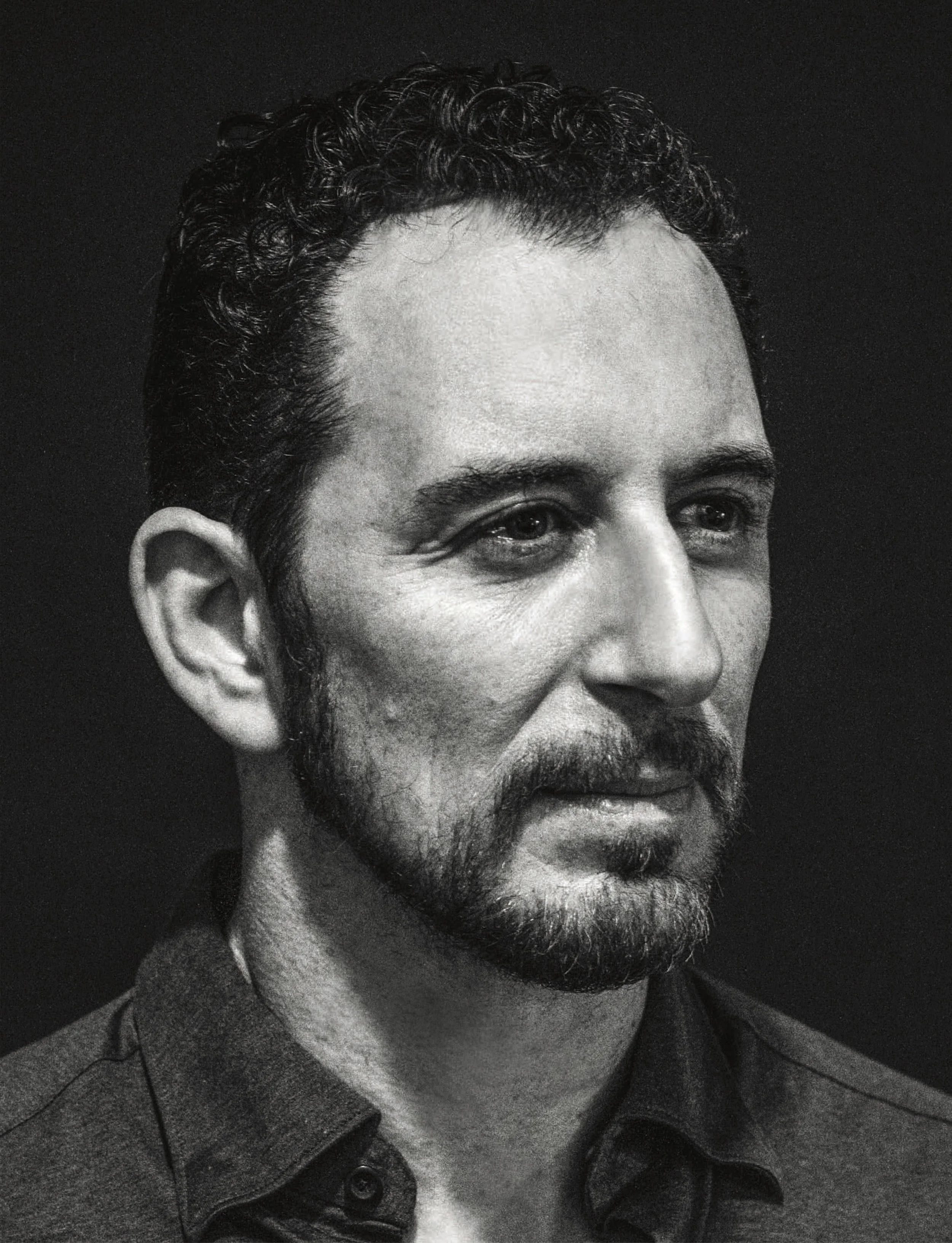
Today, on a quiet stretch of the Nickel City, the world’s first and only Ambulatory Neurosurgery Center (ANSC™) is transforming neuroscience care that everywhere else still requires an intensive care unit (ICU), an overnight stay, and a small army of hospital-based health care professionals. The center is led by Dr. Elad I. Levy, the globally known endovascular neurosurgeon whose labor and leadership have drawn trainees, start-ups, and the merely curious to Buffalo to watch history happen in real time. As he states, “Innovation does not happen in a vacuum; it requires the alchemy of unique skill sets simmering together in a cauldron of unabashed vision and unified grit.” He attributes the inception and success of the ANSC™ to Dr. Douglas Moreland with the yeoman’s effort and leadership of CEO Michael Courynea.
“Beginning with the robust clinical engine provided by the spine team of Drs. Pollina, Stoffman, and Mullin, we were able to recruit some early clinical trial research,” Levy says. This served as a proof of concept and springboard to allow clinician investigators to envision a new epicenter for robust outpatient clinical and basic science research. Partnering with novel AI-based global startups, these visionaries dismantled conventional, time consuming, and costly barriers, creating an instant attraction for meet-tech startups.
When did we first get to see history unfold? It was at the Congress of Neurological Surgeons (CNS), Buffalo broadcast, a first: intracranial aneurysm case performed from an outpatient center. This year, another first landed: a carotid stent placed live from the ANSC™, the first in any Ambulatory Surgery Center (ASC), with the control, calm, and speed that only a purpose-built ambulatory center can deliver. There are more than four thousand ASCs in the U.S. that do vascular and cardiac work; yet none had boldly explored such uncharted territory. Buffalo did, and they did so in spectacular fashion. This isn’t spectacle for spectacle’s sake. It’s a different contract with patients: same-day personalized care, concierge-level experience, and technology that tilts invasive to minimally invasive to non-invasive. It’s science, access, and affordability wrapped in near-perfect patient satisfaction scores (almost unheard of for most health-care entities), moving together in tandem.
m. dellas
What changed? Neurotechnology finally caught up with ambition.
If orthopedics made the outpatient leap for joint replacement a decade ago, why has neurosurgery been the last holdout, the specialty you couldn’t decouple from complex technology dependence and critical care protocols? But an undeniable cascade of innovations arrived: AI-guided navigation, advanced supple endovascular tools, radiation-free optical tracking, portable imaging, neurotechnology, and smarter implants. Suddenly, the “only in hospitals” list began to shorten. Centers like Buffalo’s ANSC™ proved what the data had been whispering: with the right patients, physician teams, and protocols, outcomes match or exceed inpatient surgery while costs free-fall and recoveries quicken.
Neuro-techonomics, the health economics of delivering better neurological outcomes (via neuro-innovation) at lower total cost of care, achieved by moving appropriate neurosurgical cases into an ambulatory, innovation-dense environment. It’s where safety, speed, and savings compound exponentially. It is a model that integrates AI, research, financial sustainability and growth.
The ANSC™ is the model creating the blueprint for how the world will deliver brain health in the next decade.
The Buffalo playbook
Speed. Traditional hospital research contracting can take six to eighteen months. The lean research engine of the ANSC™ can green-light in two to four weeks, accelerating first-in-human studies, pivotal trials, and health economics work that payers notice. Startups covet this tempo due to fierce competitive environments and irrecoverable costs of time delays, and patients benefit from fast-tracking to market approval.
Precision. Neuro-technologies like AI-driven, radiation-free optical navigation slash exposure, shorten procedures, and keep accuracy high, an elegant fit for the ambulatory environment where fast recovery is the design constraint, not an afterthought.
People. If you know Buffalo’s medical lineage, you know visionary pioneers. The ANSC™ is the next volume in that storybook series. The late Dr. L. “Nick” Hopkins, was the visionary who reimagined stroke care by treating the brain “from the inside out.” As Nick said often about stroke care innovation, “In fact, we are just getting started.”
Place. This city’s creative engine thrives on collaboration. An ANSC™ requires exactly that, a multidisciplinary team of surgeons, neuroscientists, payers, and patients rowing in the same direction, resulting in high quality innovative care at a fraction of the cost
“Firsts” are nice. Futures are better.
The ANSC™ “firsts” aren’t trophy-hunting; they’re path-clearing and paradigm changing:
First outpatient intracranial aneurysm case from the ANSC™.
First outpatient carotid stent from the ANSC™.
First outpatient, multi-omics, AI-driven neuro research grants powered by NVIDIA, Google DeepMind, and OpenAI.
First Muscle Neural Network myoelectric neuro-prosthetics research for which Buffalo is the only U.S. site. You go to Australia, or you come to Buffalo for the opportunity to be the first recipient of this cutting-edge technology.
Each expands the list of conditions we can treat outside the hospital. Each widens access to same-day, high-tech, human-centered care. And each signals to payers and regulators that this is not boutique medicine; it’s better medicine that costs less. That’s neuro-techonomics in action.
Where the future is being made? Emerging neurotechnology, translational research, and clinical research.
The future of neurosurgery across every neuroscience specialty is moving at lightning speed to achieve minimally- and non-invasive care. And the ANSC™ is driving it. How?
Identify the most promising technologies early.
Develop them with neurosurgeons, neuroscientists, and industry at the same table.
Drive approvals through rigorous, fast-moving research designed for payer and regulator confidence.
Create the neurodata repository necessary to drive new neuro technology efficiently.
Right now, ten active trials and registries are running under the ANSC™ umbrella, with a pipeline of more than forty startups and established companies queued behind them. These are products you have not heard of yet. But you will. And Buffalo will have played a pivotal role in putting them on the map. These are devices and therapies that may read like science fiction but will soon be our new reality.
The Merge: Neurogenomics + AI
To understand disease before it manifests is the ultimate goal of neuroscience, and the ANSC™ is building that reality through Neurogenomics AI. Through strategic partnerships using Google DeepMind and OpenAI, the ANSC™ is merging high-resolution neurogenomic data with cutting-edge AI pattern recognition to uncover molecular and structural biomarkers for aneurysm risk, neurodegenerative disease, and recovery.
This fusion of genomics and AI creates a dynamic “digital twin” of the brain, enabling prediction, personalization, and precision treatment at a level once thought impossible. What once sounded speculative is now clinical reality.
Neuro-Oncology in the Ambulatory Setting
When the ANSC™ installed the world’s first Gamma Knife in an outpatient center to treat brain tumors and other neuro-oncology conditions, it became more than a medical milestone; it became a community triumph. For patients across Western New York, access to world-class, noninvasive brain treatment is no longer limited to distant hospital systems or long wait times. It’s here, at home, delivered with the warmth and precision of concierge medicine. Patients can now receive life-changing radiosurgery in a personalized setting and return home the same day, often with less cost, less stress, and more accessibility. For Buffalo, this is not just another “first.” It’s proof that innovation and compassion can coexist under one roof.
The ANSC™ once again shows that Western New York doesn’t wait for the future of medicine, it builds it with patients-centered focus.
Why Buffalo? Because this city bets on momentum. A civic ask and a promise.
The ANSC™ is a research accelerator, a regulatory fast lane, and a patient concierge experience all under one roof. If you are a patient, physician, investor, or policymaker, you may be experiencing a sense of fear or missing out. We’re not waiting for the coasts to validate it. We’re simply doing what we do best: providing care as if these patients are family. As said at UBNS to the students and residents who are part of the fabric of patient care at the ANSC™, “Treat patients like they are your family, and decisions become clear and simplified.”
Buffalo doesn’t have to hope it’s part of the next chapter of medicine. We write it. To the hospital executives, insurers, and employers reading this: partner, don’t posture. Shift the right cases. Build the network. Scale the savings. To our universities and startups: bring your hard problems; the ANSC™ will accelerate. To patients and families: ask if your procedure can be done outpatient, the answer may surprise you. Because in two years we went from “no way” to “we did it on camera.” In the next five, we’ll go from exception to expected, and cities that don’t adapt will be left paging through our back issues.
The ANSC™ is not a glimpse of the future. It’s the door, standing open, and Buffalo is holding it for the world.
Aimee C. DeGaetano, PhD (ABD), MPH, RD, from Eastern Virginia Medical School, Department of Health Science & Medicine, Division of Emerging Technology and Digital Health, specializing in Neurotechnology. She is the Chief of Emerging Technology and Translational Research, consulting with the ANSC™.