
a taste for life
Susan Roney never sought the spotlight. She’s not a person who is eager to talk about herself.
Humble by nature, and a trial lawyer by trade, Roney is the very embodiment of the well-worn phrase “actions speak louder than words.”
But sometimes life has other plans for us. And so, when the otherwise healthy Roney, a mother of two who had just turned fifty, was diagnosed with stage four lung cancer in 2009, once the shock settled, the urge to act to mitigate the suffering of others became a strong one.
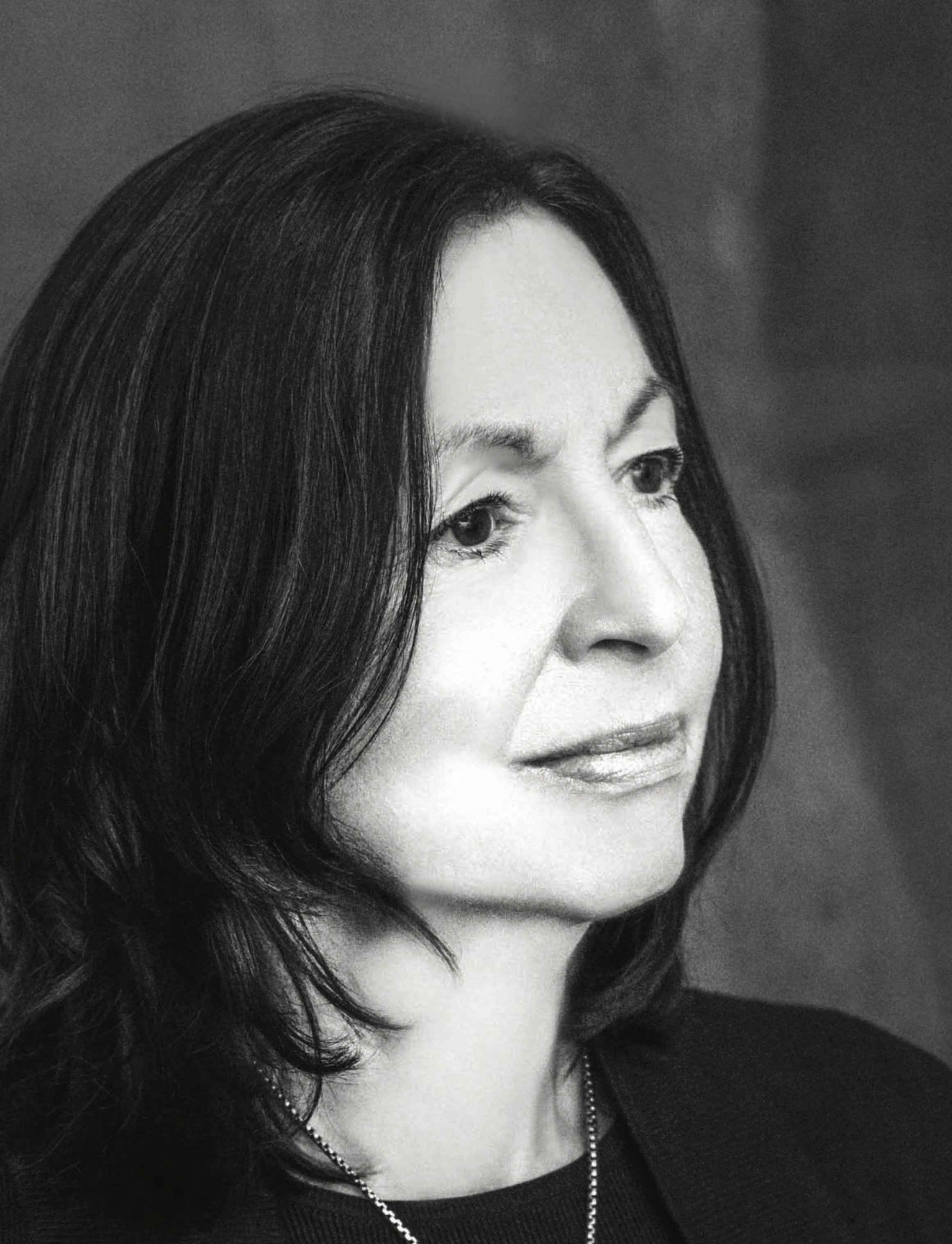
“I was, by all appearances, a very healthy person,” Roney says. “I was still young. I was active. I never smoked. But I had some shortness of breath and other symptoms. I ignored them for as long as I could. When I was finally diagnosed, it turned out that I had stage four lung cancer, what was called adenocarcinoma.
“There’s always been a huge stigma attached to lung cancer, with the misconception that if people would just stop smoking, no one would have lung cancer, and that would be that.”
Roney learned that, due to these misconceptions, funding for lung cancer research was nominal, despite the fact that it was one of the leading causes of death for women in the United States. With this knowledge, a seed was planted.
Originally diagnosed at Roswell Park Comprehensive Cancer Center in Buffalo, Roney sought a second opinion from Memorial Sloan Kettering in New York City, where she says she was told, “‘Go home, go to Roswell–you’ve got the best there is there,’ which gave me enormous comfort and a sense of security.” She responded well to her initial treatment at Roswell, and then began to focus on giving something back to the community that had helped her through this dark period.
“I had been blessed with great doctors,” she recalls. “We have such a tremendous resource in Roswell Park. I joined the lung Cancer Advocacy Group, and we started doing a number of educational initiatives. Around then, I met Sue Sullivan, who was the same age as me, a non-smoker, and had been diagnosed with the same form of cancer. Sue started raising money by putting together a beer blast, which was loaded with all of her friends and family, and eventually, it came to me–well, if she could do the beer blast, what could I do?
“Sue did the beer blast in the spring. So I started a wine tasting in the fall. And that became Taste for Life, launched in 2010, which was about a year and a half after my diagnosis.”
Taste for Life had humble origins, with Roney running the event from her kitchen, hand-writing all the tickets, and employing a grass-roots approach. Fifteen years later, the annual event has raised nearly seven hundred thousand dollars. Some of that money has gone to efforts aimed at challenging misconceptions surrounding lung cancer. But much of it has also been earmarked for clinical trials on new treatments.
“One of the first things we focused on was a test called OmniSeq, which was Dr. Carl Morrison’s baby at the time,” Roney says. “It was in the very early stages of personalized medicine based on identifying unique mutations.”
Dr. Morrison’s test was designed to identify different mutations of the disease, pairing these variations with a targeted drug. Since OmniSeq wasn’t covered by insurance at the time, Taste for Life’s funding paid for patients to take the test, which was cost-prohibitive for many people. Eventually, Dr. Morrison’s test was proven to be efficient and effective, and insurance companies started paying for it.
“In the meantime, another good friend, Sharon McCann–she was about my age, very healthy, active, a non-smoker–was diagnosed with stage four lung cancer. And she had stopped responding to her chemotherapy, so they were trying to figure out what to do next for her.”
McCann became the first person to receive the OmniSeq test. The resulting information led to the diagnosis of an extremely rare mutation.
“But for OmniSeq, God knows how many tests Sharon would have had to go through before that specific mutation was identified,” Roney says. “Fortunately, there was a drug that had been developed to target that mutation, and so she was able to go on to targeted therapy. And she did respond to that.
“That was exciting for us, because we had funded the test, with the help of the Roswell Park Alliance Foundation, and we worked closely with Dr. Morrison. Sharon had that test approved and it saved her life. There’s no question.
“It was really just the most rewarding thing you could possibly imagine. It was incredible.”
Roney credits the Roswell Park team with giving her what she says she needed most during the time of her initial diagnosis and treatment–a sense of hope.
“I wanted hope, but not artificial hope,” she says. “My doctor said, ‘We’re going to start with plan A, and we’re going to do that as long as plan A works, and when plan A doesn’t work, we go to plan B, and from there, we go to C, and we just keep going.’
“And that’s what we’ve done. He gave me a lot of hope. He told me there was absolutely no reason why I wouldn’t respond to these drugs, and that I was going to do well. And I did.
“Roswell fosters an environment of hope and positivity. There’s nobody there who doesn’t love their job. And there’s so much good work that the Roswell Park Alliance Foundation does. In addition to the millions of dollars raised for cancer research, there’s the moral support, the encouragement, and the sense of hope. You just can’t replace that.”
Roney notes that her philosophy of life changed during this period, as did her methodology of measuring that change.
“It was an enormous change, a major trauma and a shock, and it took quite a while to get my sea legs back,” she says. “I always continued working, to some degree. It kept my mind focused on normal things. Eventually, I realized I needed to cut back, though, because I was working a lot, and I couldn’t continue to do that, physically or emotionally. So I became more targeted in the pro bono, volunteer, and community activities I was involved in, and more focused on fewer things.
“I also spent a lot more time with my family and friends. ‘You only live once’ became my mantra. I started doing a lot more traveling, more family activities, and less working.
“That’s the silver lining, if there is one. I haven’t just survived cancer–I’ve thrived. And that’s my hope for other people–to really turn their lives around and focus on the things that matter most. Because you just never know what the future holds.
“You only live once. Make it count. It’s beautiful. But it’s not guaranteed.”