
clear intention
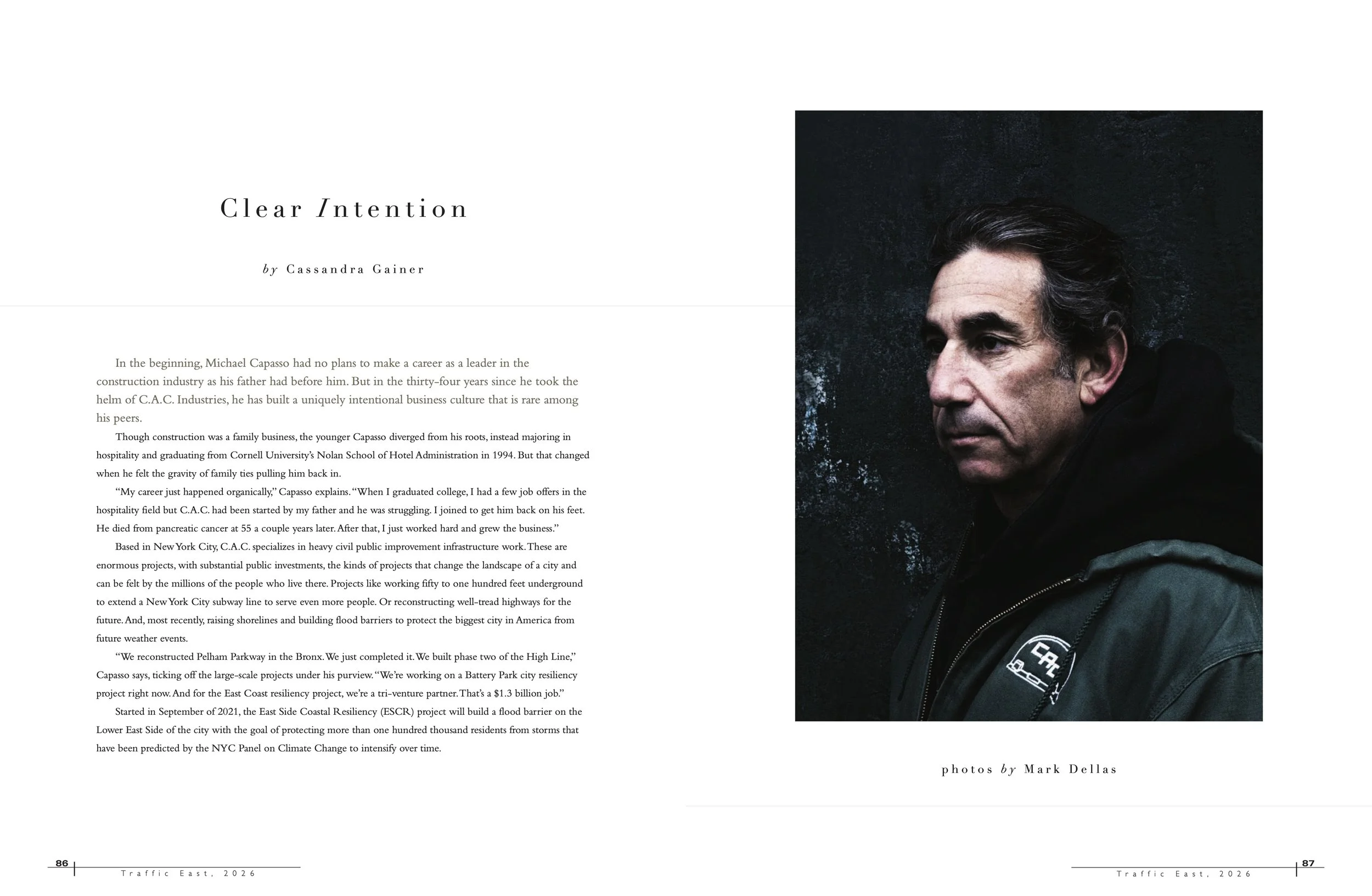
In the beginning, Michael Capasso had no plans to make a career as a leader in the construction industry as his father had before him. But in the thirty-four years since he took the helm of C.A.C. Industries, he has built a uniquely intentional business culture that is rare among his peers.
Though construction was a family business, the younger Capasso diverged from his roots, instead majoring in hospitality and graduating from Cornell University’s Nolan School of Hotel Administration in 1994. But that changed when he felt the gravity of family ties pulling him back in.
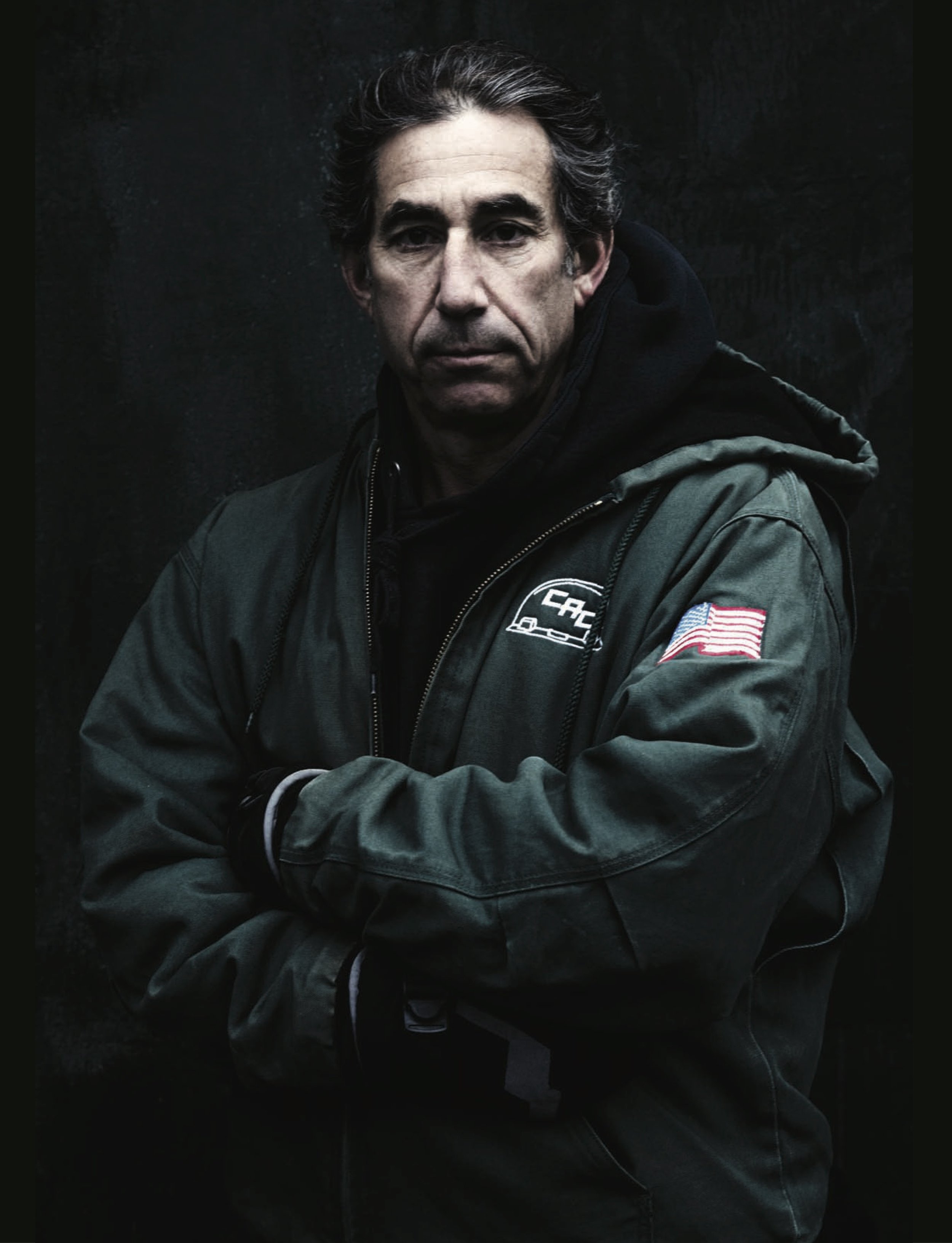
“My career just happened organically,” Capasso explains. “When I graduated college, I had a few job offers in the hospitality field but C.A.C. had been started by my father and he was struggling. I joined to get him back on his feet. He died from pancreatic cancer at 55 a couple years later. After that, I just worked hard and grew the business.”
Based in New York City, C.A.C. specializes in heavy civil public improvement infrastructure work. These are enormous projects, with substantial public investments, the kinds of projects that change the landscape of a city and can be felt by the millions of the people who live there. Projects like working fifty to one hundred feet underground to extend a New York City subway line to serve even more people. Or reconstructing well-tread highways for the future. And, most recently, raising shorelines and building flood barriers to protect the biggest city in America from future weather events.
“We reconstructed Pelham Parkway in the Bronx. We just completed it. We built phase two of the High Line,” Capasso says, ticking off the large-scale projects under his purview. “We’re working on a Battery Park city resiliency project right now. And for the East Coast resiliency project, we’re a tri-venture partner. That’s a $1.3 billion job.”
Started in September of 2021, the East Side Coastal Resiliency (ESCR) project will build a flood barrier on the Lower East Side of the city with the goal of protecting more than one hundred thousand residents from storms that have been predicted by the NYC Panel on Climate Change to intensify over time.
Climate resilience has been a critical focus for city leadership since October 2012 when Hurricane Sandy made landfall in New York City, killing forty-four New Yorkers and causing billions of dollars in damage. The ESCR project is part of a range of projects designed to protect the coastal city from increasing climate risks.
Projects like ESCR ensure that Capasso and C.A.C.’s five hundred employees will have a significant and positive impact on New York City and its citizens for decades or longer. But it’s not the only way Capasso plans on leaving a mark. One of his latest moves has the potential to impact C.A.C. employees and their families for generations to come.
In 2024, Capasso converted C.A.C. Industries to an employee stock ownership plan, or ESOP, essentially transferring ownership of the enterprise from himself to his employees. He now describes himself as the company’s president, rather than the owner.
“To me, the most important asset of this company is its people, which is something that doesn’t show up on a balance sheet,” Capasso explains. “I wanted to give back to our employees, but ESOP was also the best way for long-term, sustainable growth for the organization and the enterprise. It was aligned with business success.”
In an ESOP, the ESOP trust owns all the company shares and the employees become the beneficiaries of the trust, much like a qualified retirement plan. For companies, an ESOP can help to align employee interests with company performance because as partial owners, employees have a vested interest in ensuring the company does well.
For employees, the financial rewards of an ESOP can be significant and long-lasting. A study by the W.K. Kellogg Foundation found that employees who work for ESOP companies had a median household net wealth that was ninety-two percent higher compared to employees of non-ESOP companies.
Despite the potential benefits of the ESOP, Capasso is the first to admit that his plan for the company had its detractors, explaining with a rare smile that some people thought he was crazy to give up ownership of the company he had built.
“You know, a lot of people challenged me about the ESOP,” Capasso says. “But I really wanted to give something to the people who helped build this company and ensure they would have a better retirement than their peers. The positive impact on their retirement is what’s really going to bring it to life for employees.”
Those who know Michael Capasso well were likely not surprised by his move to share his success with employees. As a leader, he has an extraordinary focus on C.A.C.’s people and culture, and has been intentional from the start about the kind of company he was building.
Together with his employees, Capasso has grown C.A.C.’s culture on a foundation of four core values: 1) it’s always we, 2) be green and lean, 3) educate to transform, and 4) be humble and kick ass.
The values are explained in more detail through twenty-seven of what Capasso calls “fundamentals.” To ensure the values and fundamentals are threaded through everything the company does, Capasso holds a weekly all-employee meeting on Mondays where the agenda always includes discussion of one of the fundamentals.
Through the years, Capasso has developed and documented this detailed cultural blueprint of values and fundamentals to drive the company’s success, but even before he put pen to paper, his leadership was intuitively shaping something that looked and felt different than many competitors.
“I can’t say that the values you see written today were stated in the beginning. But it was always how we lived from the beginning,” Capasso explains. “And it sets us apart.”
This culture also extends beyond the walls and job sites of C.A.C. through C.A.C. Cares, a program Capasso founded to empower employees to develop ideas to make a difference in communities across New York City.
“It’s tied into our fundamental twenty-seven–‘make a difference,’” Capasso explains. “When we work in neighborhoods, we can cause traffic, delay garbage pickup, block resident driveways–these kinds of things. It was important to give back to neighborhoods we disrupt. We do a range of activities–backpack giveaways, Halloween candy drives, holiday toy drives, Thanksgiving turkey giveaways–all to benefit people in the neighborhoods where we have large-scale infrastructure projects, especially in communities with real needs.”
Capasso’s vision for the kind of company he wants to build also has more global aspirations when it comes to sustainability. C.A.C. is a member of the Institute for Sustainable Infrastructure (ISI) and is certified by ISI as an Envision Qualified Company, which requires C.A.C. to follow guidelines to assess and improve the sustainability performance of infrastructure projects.
Additionally, the company is verified by the Waterfront Edge Design Guidelines, which outlines standards to address climate challenges like rising sea levels and the increasing risk of coastal flooding.
Capasso also urges employees to make their daily work more sustainable and keep a focus on their value of “be green and lean.” This core value has provided cost-benefits for customers, driven decisions to use equipment with sustainability advantages, and increased company recycling rates. And this is all in addition to the large-scale infrastructure projects the company takes on to tackle the challenges of climate change.
Despite his success, Capasso is not yet satisfied. He thinks there’s more to do, and better ways to do it.
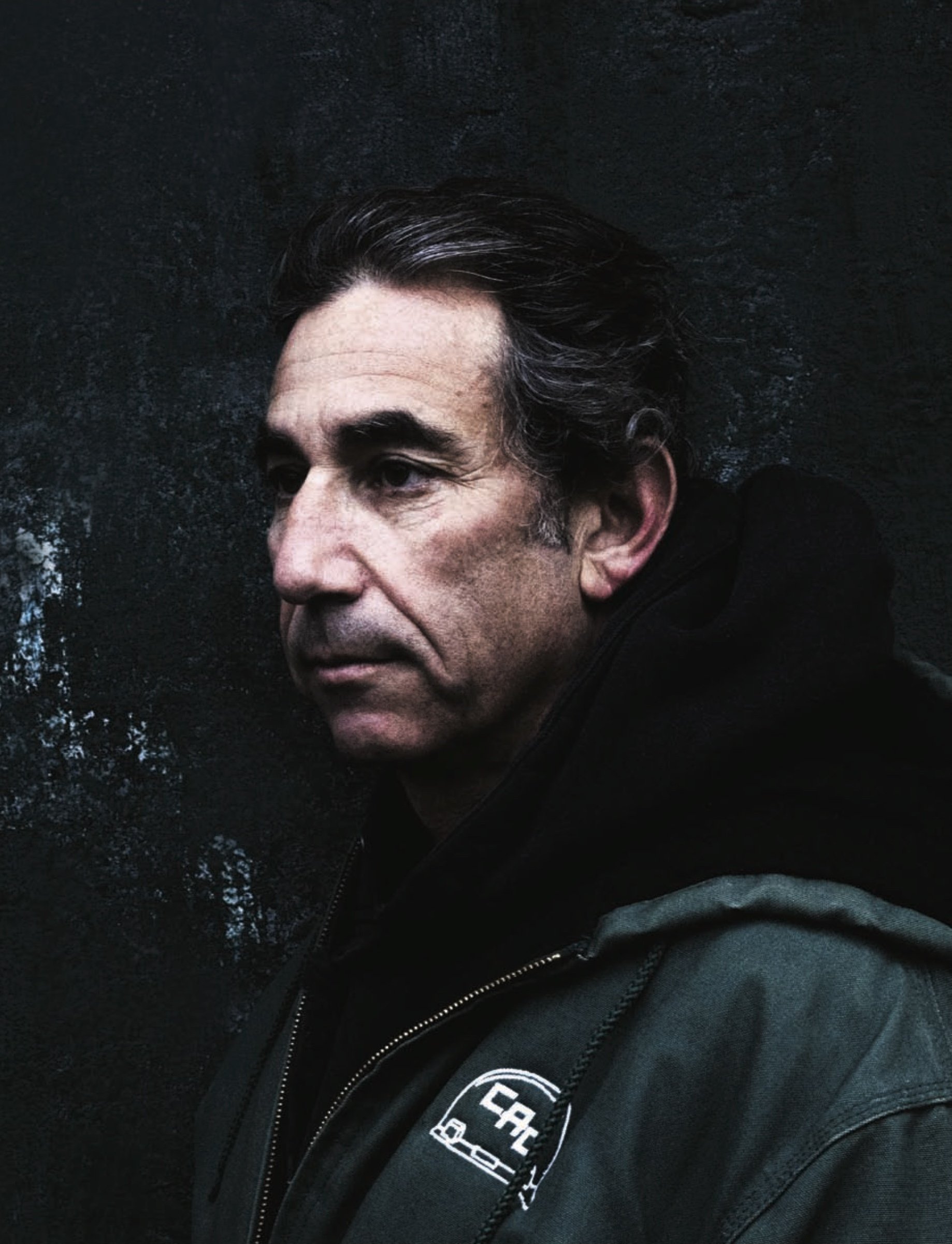
Regardless of the long hours he puts in at C.A.C., Capasso is in a continual state of learning, evolving, and improving. He regularly participates in executive education at rigorous institutions like Harvard and the London Business School. He encourages his employees to do the same, and covers the costs.
Capasso also seeks the mentorship and advice of other leaders, and is an active member of the Young Presidents Organization, an exclusive invite-only organization of the world’s most successful business leaders, where members exchange new ideas about topics like corporate culture, work-life balance, business practices, and innovation.
“You know, I think some people look at me like I’m a little crazy,” he explains. “I work an enormous amount of hours, and I’m always thinking about things I can try to improve. I’m always asking, how can we get better?”
This mindset and the company it built is being recognized both in New York City and beyond. C.A.C. was voted the top utility contractor in New York in 2024 by Engineering News Record, the global “bible” of the construction industry. The company has also been named for four consecutive years to the “100 Best Places to Work in New York City” by Crains New York Business.
And in 2022, Capasso was appointed by New York City’s Mayor Adams to the Capital Reform Task Force. The task force brings together industry experts and government agency leaders to explore ways to improve the design and execution of public works projects in New York City, from planning to procurement to construction.
“I was appointed by the mayor to this task force that focuses on how to improve the capital delivery program for the city of New York. We are looking at where can we make, collectively as an industry, changes to deliver projects that are faster, safer. I’m honored to be doing it,” Capasso says.
Involving business in the process is important, Capasso emphasizes. As a business leader, he is committed to innovating and finding better ways of doing things, and this is the kind of commitment he believes is strongest in the private sector.
“I have always believed it was incumbent on the private business community to implement change,” he says. “Innovation is only going to come from industry.”
The projects C.A.C. takes on are enormous, demanding, and complex. Capasso’s days are often long, intense, and full of unexpected challenges. It’s not an easy industry, Capasso admits, and doing it in New York City comes with its own difficulties. But to Capasso, one thing has always been clear.
“Leadership means you have to be open, listen to different perspectives, and challenge each other for the most productive outcome,” Capasso says. “Look, to me it’s simple–the least common denominator is you treat people well and with respect.”
When asked if this is the legacy he wants to leave, he scoffs.
“I’m not thinking about that,” he says. “I’m still here.”
in print
To learn more about C.A.C. Industries, visit www.CACindinc.com.
photos by mark dellas